


Athens, the Greek capital, is a vibrant treasure trove of history and culture. Nowhere else on our planet will you find such a rich collection of breathtaking archaeological ruins, forming an open-air museum of unparalleled grandeur.
Exploring and enjoying are the key words here, with a seemingly endless list of attractions.
But what are the absolute must-see highlights during your city trip to Athens? Rest assured, we have prepared the ultimate guide to help you discover the best of this enchanting city. Dive in and plan the city trip of your dreams to Athens!
It is advisable to purchase tickets in advance for the main attractions. The Acropolis and Acropolis Museum are popular highlights you don’t want to miss due to ticket unavailability on your travel date. Want to visit as much as possible? Then purchase the Athens Pass which grants you access to the Acropolis, the Acropolis Museum, and the city audio guide.
The top 15 attractions of ancient Athens and more!
In Athens, numerous attractions reflect the splendor of ancient Greece. There are various gems from Greek antiquity that you absolutely must not miss.
The Acropolis is, of course, a must-see, but the historical heritage of this city extends much further! Athens is bursting with unique treasures that will enrich your experience and give you a deeper insight into its rich past.

Parthenon on the Acropolis
Many people think that the famous temple on the hill is the Acropolis, but that is the name of the plateau. The temple is called the Parthenon and stands on the Acropolis, at 156 meters high.
The Parthenon was the temple of the patron goddess. From the Acropolis, you have a stunning view over the city, and there are more historical highlights to see on the hill, such as the Erechtheion and the statue of Athena Promachos.
The Erechtheion is an ancient temple on the north side of the Acropolis. The temple was mainly dedicated to Agata, but also to other gods; Poseidon and Hephaistos. Together with the Parthenon and 2 other temples, they are the only 4 that still stand. This temple is considered the jewel of ancient Greek architecture.
The Erechtheion is also known for its use of caryatids. These are women used as columns, but sculpted. This form of architecture was used in ancient Greece and also by the Egyptians. The official caryatids of the temple are housed in the Acropolis Museum because the caryatids become very weathered in the open air.
Find more information about Athens attractions on the Acropolis and more information about the Parthenon.
Tickets for the Acropolis are very popular, so order them online in advance!

Agora and Tower of the Winds
Agora means gathering place in Greek. In the past, this was the place where justice, administration, and trade came together, with a market hall and a large central square. Now it is a collection of beautiful ruins and one of the Athens attractions you definitely should not miss.
The Temple of Hephaistos from the 5th century BC and the Stoa of Attalos (now the Agora Museum) are still well preserved.
On the edge of the Agora stands the Tower of the Winds, 12 meters high, from the 1st century BC. The 8 corners refer to the wind directions, and there was a sundial on the tower, which was very advanced for that time.

Temple of Olympian Zeus
This temple is also known as Olympieion and is one of the most important Athens attractions.
The temple is dedicated to Zeus, the king of the Olympian gods. Construction lasted from 515 BC to the 2nd century AD. From the Acropolis, you can see the temple well with its columns of 1.7 meters in diameter and 14 meters high. Skip the line tickets for the Temple of Olympian Zeus can be easily ordered here online.

Theater of Dionysus (part of the Acropolis)
The Theater of Dionysus on the south side of the Acropolis was built in 325 BC. In ancient times, all theatrical performances were held here. Sixty-seven rows of marble seats could accommodate 17,000 spectators. The place of honor and the priest’s seat are still visible. Entrance €2 and free on the first Sunday of the month.

Panathenaic Stadium
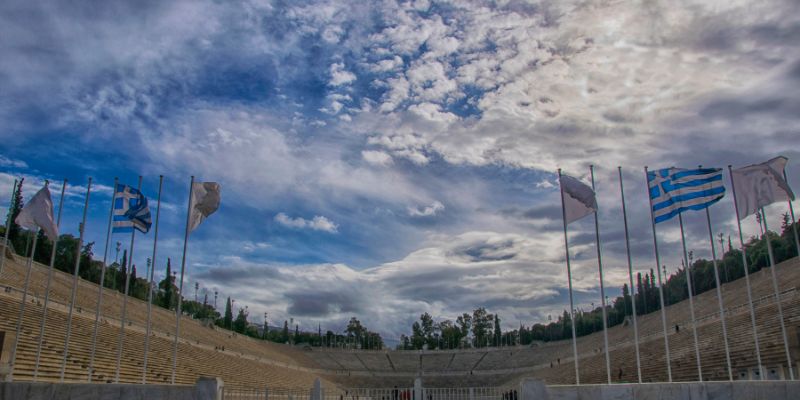
This magnificent stadium was built in 1896 on the foundations of a stadium from 330 BC. During Roman times, gladiator fights and hunting games took place here.
The Panathenaic Games were also held in this arena every four years. In the 19th century, the stadium was completely rebuilt and used for the Olympic Games. This makes it one of the must-see Athens attractions. Entrance is free.
Syntagma Square with Greek Parliament
Syntagma Square is the most famous square in Athens. It doesn’t really have attractions, but the square itself is a major attraction. Here you’ll find the Parliament Building and various cozy cafes and restaurants. The Baja Bikes tour also passes by this spot, and you can find a more detailed article in the Athens in 1 day blog.

Plaka and Monastiraki Square
Plaka is an incredibly charming neighborhood in Athens. While it doesn’t have specific attractions, the neighborhood itself is a major attraction. Plaka is one of the oldest districts in the city and retains an authentic character. The streets are narrow and steep, and fortunately, the area is car-free. You’ll find many delightful shops, restaurants, and terraces along the steps of the narrow alleys. Nightlife in Athens is also recommended in these neighborhoods!
From Plaka, you have a beautiful view of the Acropolis. Be sure to visit the lively Monastiraki Square! Find more information about Plaka.

Left Plaka – Right Monastiraki
Viewpoint from Mount Lycabettus
Lycabettus is the most prominent hill in the city. At 277 meters high, this rocky hill is taller than the Acropolis. You can walk up or take a cable car. At the top, there’s a beautiful white chapel, and you have a stunning view over the capital! This highlight is definitely among the top Athens attractions. Cable car entrance: €10 round trip.
Tip: Book a bike tour through the Greek metropolis for your first day! This way, you’ll see many Athens attractions in just a few hours.

Flisvos Marina
Flisvos Marina in Athens is one of the most popular marinas in Greece and a must-visit destination for lovers of water sports and yachting activities. The marina offers a stunning view of the Saronic Gulf and the city of Athens, and is surrounded by various restaurants, bars, and shops. Below are the many advantages of Flisvos Marina and why it is recommended for anyone looking for a unique and unforgettable experience in Athens.
Shopping and dining: Flisvos Marina offers a variety of shops and restaurants where visitors can enjoy local and international dishes and products.
All in all, Flisvos Marina is a beautiful and versatile marina in Athens that has much to offer its visitors.

Piraeus (port city of Greece)
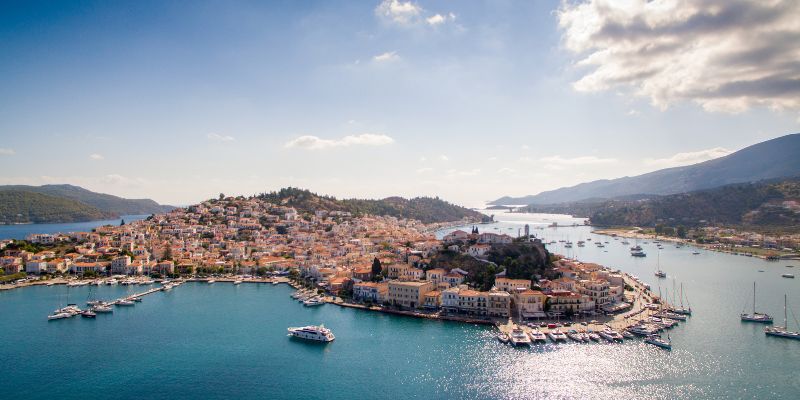
Piraeus, the largest port city in Greece, is an important part of Athens’ history. Located on the Saronic Gulf, this city was once a major commercial hub and a key port for ships sailing the Aegean Sea.
Piraeus played a crucial role in the economy of Athens in the 5th and 4th centuries BC, during a time of economic prosperity for the city. It was also an important military center, where the Athenian army was trained and equipped for the many wars they fought.
In modern times, Piraeus has grown into a significant business center and major port city. The port of Piraeus is one of the largest and busiest ports in Europe, with a capacity of over 20 million containers per year. This has led to the establishment of several industrial zones and the development of the city as an important economic center.
Besides the port, there is much to see and do in Piraeus. Visitors can enjoy the historical attractions, such as the Archaeological Museum of Piraeus and the ancient city wall, or take a stroll along the Mikrolimano promenade, where they can enjoy stunning views of the harbor and the Aegean Sea.
Piraeus is also known for its culinary scene, with many taverns and restaurants serving typical Greek dishes. The city also boasts a vibrant nightlife, with numerous bars and clubs open until the early hours.
Filopappos Hill
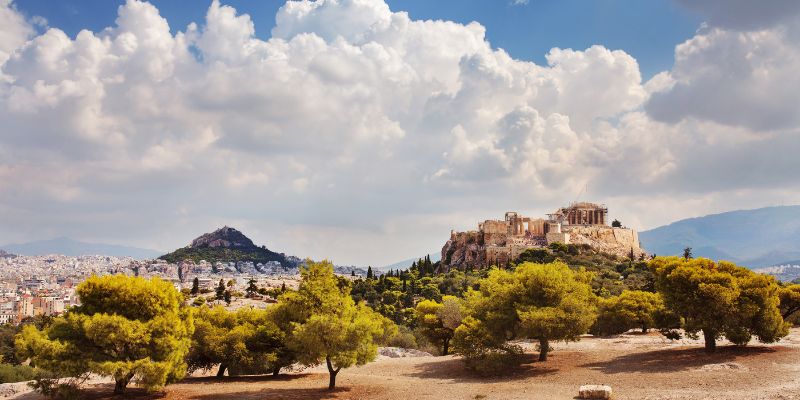
Filopappos Hill, also known as the Hill of the Muses, is a must-visit destination for anyone exploring Athens, Greece. This article discusses the history, attractions, and access information about this beautiful hill.
A bit of history: Filopappos Hill is named after Gaius Julius Antiochus Philopappos, a Roman senator who commissioned several monuments here during his lifetime. One of the most notable attractions is the statue of Philopappos, which can still be seen at the top of the hill today.
Visitors to Filopappos Hill can enjoy breathtaking views over Athens and its suburbs, as well as stunning sunsets over the Aegean Sea.
In addition to the beautiful views, there are several other attractions on this hill:
- The statue of Philopappos
- The mausoleum of Philopappos
- The Theatre Gardens located at its base
- The Pnyx Amphitheater – an ancient theater once used by political leaders in Athens.
Access and opening hours: Filopappos Hill is free to access and open daily from sunrise to sunset, with a path leading to the top where visitors can enjoy all it has to offer.
Hadrian’s Arch
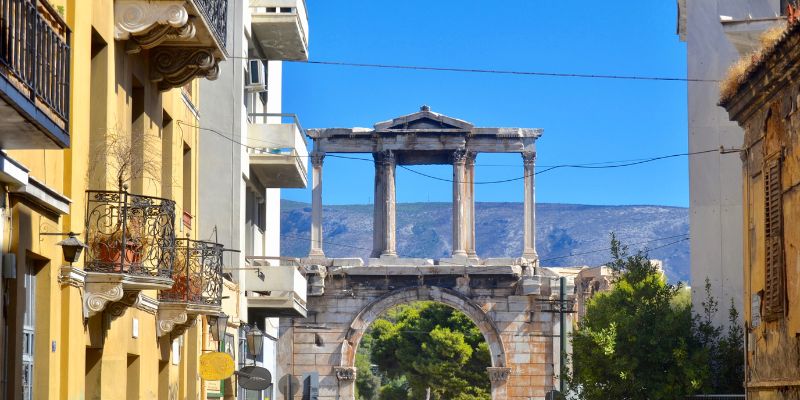
Hadrian’s Arch is a well-known monumental arch in Athens, Greece, built in 131 AD in honor of Emperor Hadrian. This arch marks the entrance to the ancient city and is an important historical and cultural symbol for Athens and its residents.
Hadrian’s Arch was constructed by order of Emperor Hadrian as a symbol of his visit to Athens. The arch was erected between the Odeon of Herodes Atticus and the Temple of Olympian Zeus and served as a welcoming symbol for the city. Over the years, the arch has been damaged by earthquakes and looting, but the remaining part is still visible and is a significant historical and cultural attraction.
Hadrian’s Arch holds great symbolic meaning for the people of Athens. It is a sign of the brotherhood between the Roman emperor and the Greek people and a reminder of the city’s rich history. It is also an important symbol of the political and cultural power of Athens and its inhabitants in the ancient world.
Access and opening hours: Hadrian’s Arch is free to access and open daily from sunrise to sunset. Visitors can view the monument and take photos of the impressive arch and the surrounding scenery.
The national gardens
The National Garden of Athens offers a peaceful and tranquil retreat amidst the hustle and bustle of the city. This beautiful garden, established in the 19th century, is an oasis of calm and lush greenery in the heart of the city.
Not far from the Acropolis and the National Archaeological Museum, this 15-hectare garden is an ideal place to relax, stroll, and enjoy nature, even in the middle of the city. It features a series of paths, flowerbeds, fountains, and ponds that make it truly special.

National Archaeological Museum
A visit to the National Archaeological Museum of Athens is essential for those interested in Greek history. Located in the heart of Athens, this is one of the largest and most renowned museums in Greece, taking visitors on an intriguing journey through the ages. The National Archaeological Museum of Athens, founded in 1889, is one of the most important museums for archaeology and classical art in Europe, showcasing an extensive range of artifacts from prehistoric, ancient, and Byzantine periods.

Central market
A visit to the Central Market of Athens is a must for anyone looking to experience Greek culture. Located in the heart of the city, the market is a vibrant mix of scent, color, and flavor, offering visitors a unique insight into the habits of Athenians. The Central Market, also known as Varvakios Agora, is one of the oldest and most beloved markets in the city, with hundreds of shops and stalls offering everything, from fruits and vegetables to spices, meat, and seafood. It is an absolute feast for the senses with aromas and flavors converging everywhere.
