


Montpellier immediately draws you into the city. Narrow streets suddenly open up to lively squares, street music can be heard somewhere, and from the terraces, you can smell fresh coffee. Moreover, the many students contribute to a young and energetic atmosphere. Amidst all this charm, you’ll discover centuries-old facades, atmospheric markets, and typical southern French squares filled with plane trees.
This combination is precisely what makes Montpellier so enjoyable. One moment you’re strolling through the historic center, and the next, you’re sitting on a terrace with a glass of local wine. Additionally, the Mediterranean Sea and various beaches are surprisingly close by.
Whether you’re here for the southern French architecture, delicious food, or the best Montpellier attractions: you definitely don’t need to plan your days here to the brim. That’s why in this blog, we’ve listed our favorite spots and handy tips for Montpellier for you.
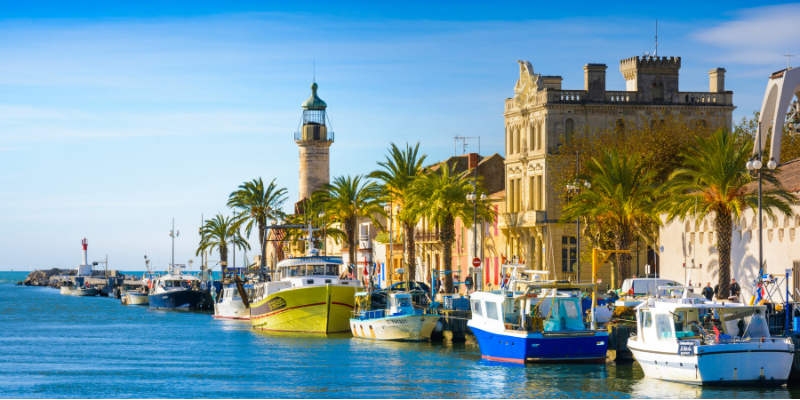
At a glance: what to do in Montpellier?
Montpellier combines history, culture, delicious food, and the Mediterranean Sea. Moreover, many attractions are close to each other, allowing you to discover surprisingly much in a short time.
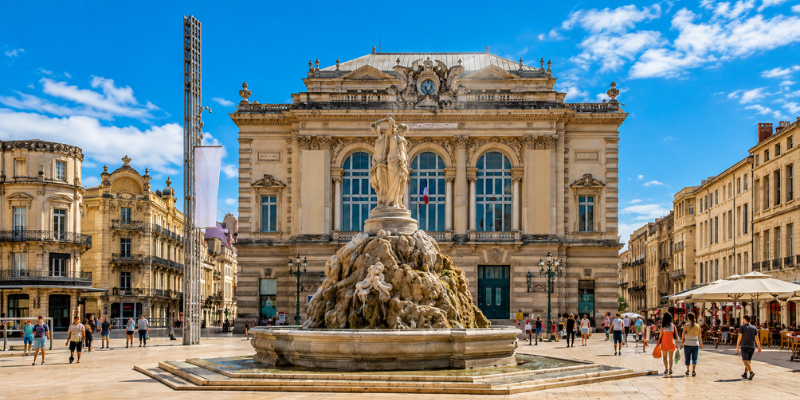
- Stroll across the Place de la Comédie, the bustling heart of Montpellier.
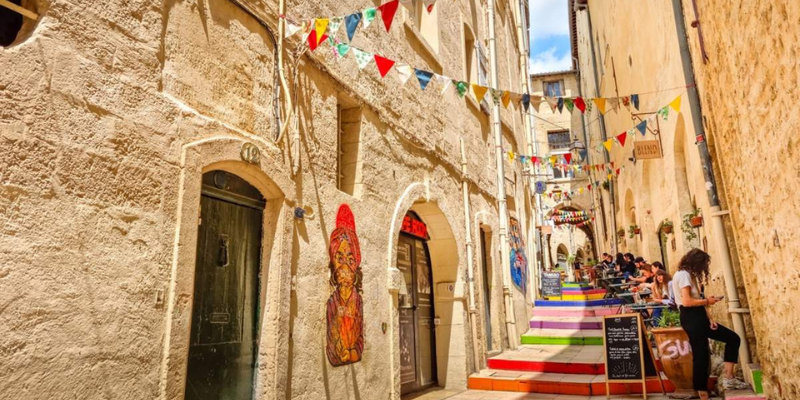
- Wander through L’Écusson, the historic city center full of narrow streets, squares, and old facades.
- Visit the Musée Fabre and discover an impressive collection of European art.
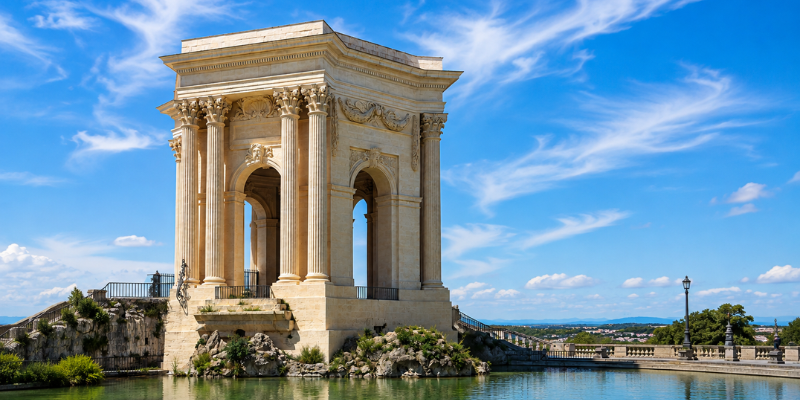
- Walk or cycle along the Promenade du Peyrou and view the historic aqueduct.
- Head to Marché du Lez for street food, cozy terraces, and local products.
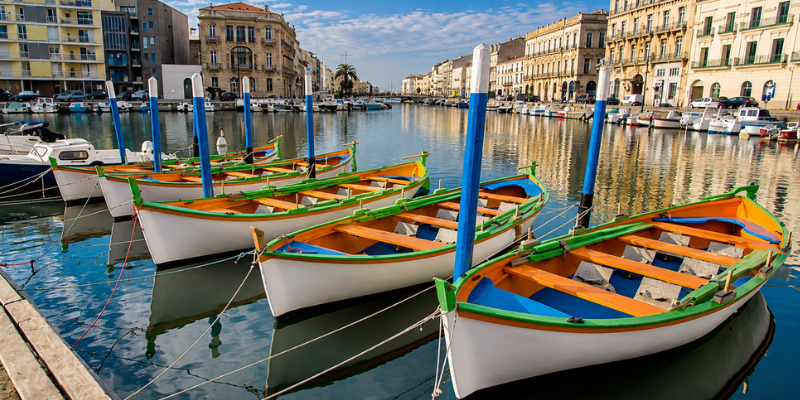
- Head towards the coast and combine your city trip with a visit to Palavas-les-Flots.
In short: from centuries-old streets to sunny terraces by the sea, there’s plenty to experience in and around Montpellier.
Why Montpellier is a city apart
Montpellier is located in the south of France, in the Occitanie region, just a few kilometers from the Mediterranean Sea. As soon as you walk through the city, you immediately notice that southern French atmosphere: lots of sun, light facades, and squares where daily life mostly takes place outdoors.
At the same time, Montpellier is much more than a sunny holiday destination. The city has a long history and grew into an important center for trade and science in the Middle Ages. For instance, the university was founded here in the 13th century, and Montpellier has one of the oldest still active medical faculties in the world.
What I particularly like is the combination of old and new. In L’Écusson, you walk through narrow medieval streets, while a little further in the Antigone district, you’re among the striking neoclassical buildings of architect Ricardo Bofill. Moreover, the many students give the city a young and lively vibe.
Add to that the Mediterranean climate, and you understand why Montpellier feels so pleasant. Summers are warm and sunny, while winters remain relatively mild. In short: Montpellier has the charm of a historic southern French city but feels young, creative, and surprisingly modern.
Attractions worth your time
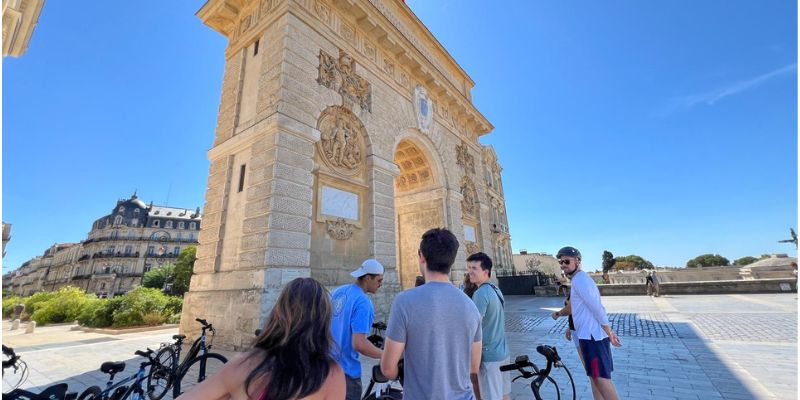
Montpellier is one of those cities where I’d personally love to hop on a bike. The historic center is compact, but there’s so much more to discover around the old town. Plus, wide squares, quiet streets, and monuments alternate along the way. This gives you a surprisingly complete picture of the city in just a few hours.
During the Highlights bike tour, you’ll cover about 9 kilometers in roughly 3 hours. You start at the famous Place de la Comédie and then pass by the Tour de la Babote, the churches of Saint-Roch and Sainte-Anne, and the historic medical faculty. The route then continues towards the Arc de Triomphe and the Promenade du Peyrou, where you can overlook Montpellier and the old aqueduct.
What I particularly enjoy about such a tour are the stories along the way. A monument becomes much more interesting when someone tells you why it’s there, and a street suddenly gains meaning when you know its history. Additionally, a local guide often knows spots and details you might otherwise walk right past.
The tour ends at the Promenade du Peyrou, where the guide serves a refreshing iced tea. A nice conclusion, especially on a warm southern French day. The e-bike and local guide are included in the tour.
My tip: don’t rush to your next activity right after. Linger a bit in the center and find a terrace. After three hours on the go, you’ve probably discovered enough new favorite spots to choose from.
Food, drink, and local tips
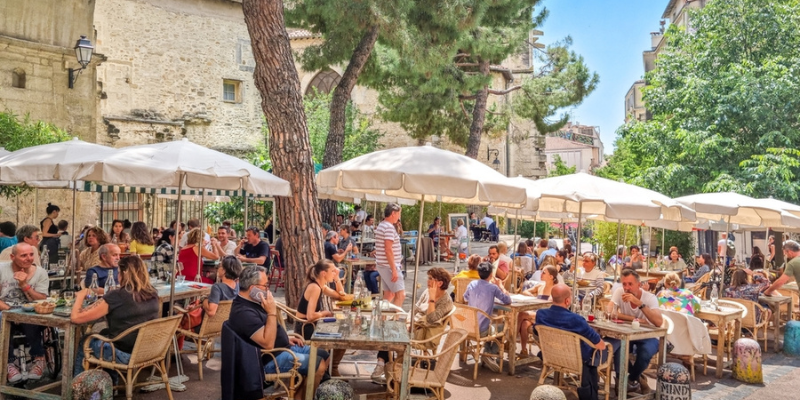
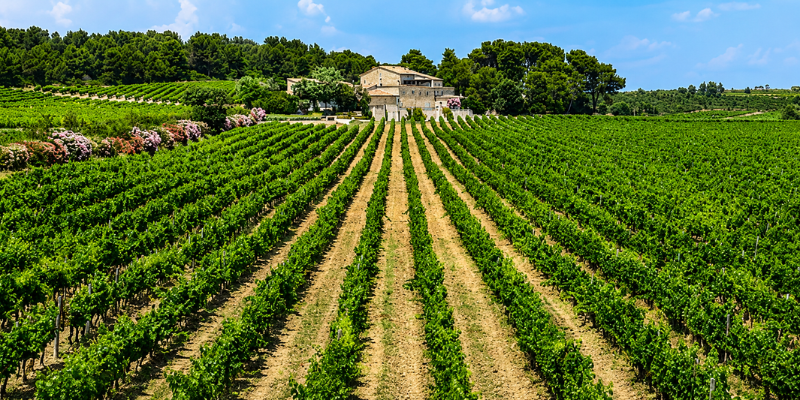
Montpellier is a delightful city for food lovers. The cuisine is distinctly Mediterranean, but you can also taste influences from the rest of southern France and North Africa. Moreover, the city is surrounded by vineyards, so a local glass of wine is a must.
A specialty you should definitely try is tielle sétoise, a savory pie with a spicy octopus filling originally from nearby Sète. In the region, you’ll also frequently come across brandade de morue, a creamy preparation of salted cod. Pair it with a glass of Picpoul de Pinet, and you’re well on your way to becoming a local culinary expert. For cheese lovers, there’s plenty of choice too, like local sheep or goat cheese with a touch of honey.
My tips for eating and drinking in Montpellier
| Place | What can you find? | My tip |
|---|---|---|
| Marché du Lez | Street food, restaurants, bars, shops, and creative spots | Head there in the late afternoon and stay for a drink |
| Halles Laissac | Covered market with fresh produce and various food stalls | Perfect for trying different local products |
| L’Écusson | Many small restaurants, wine bars, and cafés | Don’t miss the smaller side streets around the well-known squares |
| Place Jean Jaurès | Terraces and cafés in the heart of the historic center | A great spot for a drink and people-watching |
My tip: don’t plan every meal in advance. Especially while wandering through L’Écusson, you’ll come across small bakeries, wine bars, and terraces where you’ll want to spontaneously stop. And honestly, that’s part of the charm of southern France. ☀️🍷
Best time to visit Montpellier
Montpellier is a great destination almost all year round. However, the season does make a significant difference. July and August can get quite hot and crowded, while spring and autumn are ideal if you want to see a lot of the city. Therefore, the best time to visit largely depends on what you want to do during your stay.
| Period | Weather | Crowds | My tip |
|---|---|---|---|
| March – May | Pleasant, 16–22°C | Low to moderate | Ideal for walking, terraces, and outdoor activities |
| June – August | Warm to hot, 28–35°C | High | Start early and seek shade or the beach in the afternoon |
| September – October | Warm, 20–27°C | Moderate | In my opinion, the best time to visit Montpellier |
| November – February | Cool to mild, 8–15°C | Low | Quieter and perfect for museums, markets, and local atmosphere |
Personally, I would choose September. The intense summer heat is usually over by then, but the southern French summer vibe still lingers in the city. Plus, the terraces are lively, and students return for the new academic year. This gives Montpellier that vibrant atmosphere that suits the city so well.
And as a bonus, you’re right in the middle of the grape and wine season. That doesn’t seem like a bad time to be in southern France. 🍷😏
Plan your visit to Montpellier
Montpellier is one of those cities where you might find yourself staying longer than planned. The combination of historic streets, sunny squares, excellent restaurants, and that relaxed Southern French vibe makes the city so appealing.
Moreover, there’s no need to rush from one highlight to the next. Wander through L’Écusson, settle down at a terrace, and take your time for a leisurely lunch. And if you feel like visiting the sea, the Mediterranean is surprisingly close by.
In short, whether you’re visiting for a few days to enjoy culture and good food, or combining Montpellier with the rest of Southern France, the city has everything you need for a delightful city trip.
Frequently asked questions about Montpellier attractions
What are the main attractions in Montpellier?
The Place de la Comédie, L’Écusson, the Musée Fabre, the Promenade du Peyrou, and the Antigone district are among the most famous attractions in Montpellier. Together, they beautifully showcase the blend of historical and modern elements the city is known for.
How many days do you need for Montpellier?
Two full days are enough to explore the historic city center and the main attractions. If you have a third day, head towards the Mediterranean Sea or discover the vineyards and villages around Montpellier.
Is it easy to get to the beach from Montpellier?
Absolutely. Montpellier is close to the Mediterranean Sea, and from the city, you can reach various coastal resorts. Palavas-les-Flots and Carnon are popular options. This makes it easy to combine a city trip with an afternoon by the sea.
Is the Musée Fabre worth visiting?
Yes, especially if you love art. The Musée Fabre has an extensive collection featuring works by Courbet and Delacroix, among others. Additionally, the museum is located right in the center, making it easy to combine with other attractions. Be sure to check the current opening hours and admission prices before your visit.
When is Montpellier the least crowded?
From November to February, it’s generally much quieter than in the summer months. Moreover, the temperatures are relatively mild by Southern French standards. If you prefer pleasant weather and less summer crowding, May, September, and October are great months to visit Montpellier.