


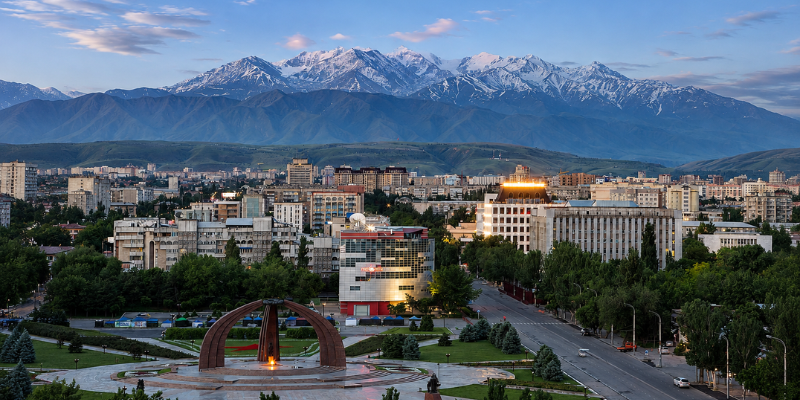
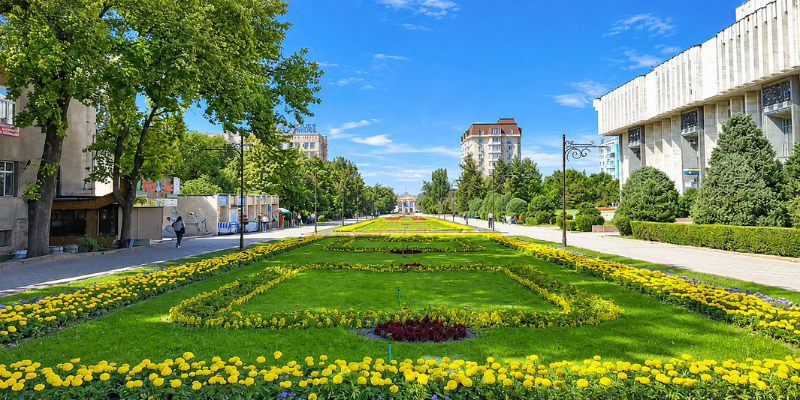
Bishkek probably isn’t at the top of your list for a city break. Yet there’s a good chance the city will surprise you. Wide, tree-lined Soviet boulevards, lively markets where the scent of spices and fresh bread greets you, and in the background the snow-capped peaks of the Tian Shan mountains. On clear days you can see the mountains right from the city centre.
The capital of Kyrgyzstan is compact and green, but at the same time Bishkek has a character all its own. You’ll find monumental Soviet architecture, while modern cafés and traditional restaurants create a completely different atmosphere. There are also colourful bazaars where you get a taste of daily life in the city. What’s more, the mountains are so close that you can be in the middle of nature surprisingly quickly from the bustle of the capital.
Whether you want to try local dishes, learn more about the Soviet past or simply wander between squares, parks and markets, there’s plenty to do in Bishkek. It’s precisely the combination of history, local culture and impressive nature that makes the city an interesting first introduction to Kyrgyzstan.
Best things to do in Bishkek
- Wander around Osh Bazaar, the liveliest market in the city
- Stroll across Ala-Too Square and watch the changing of the guard
- Visit the National Historical Museum for a glimpse into Kyrgyzstan’s history
- Explore the green boulevards, parks and different neighbourhoods of Bishkek
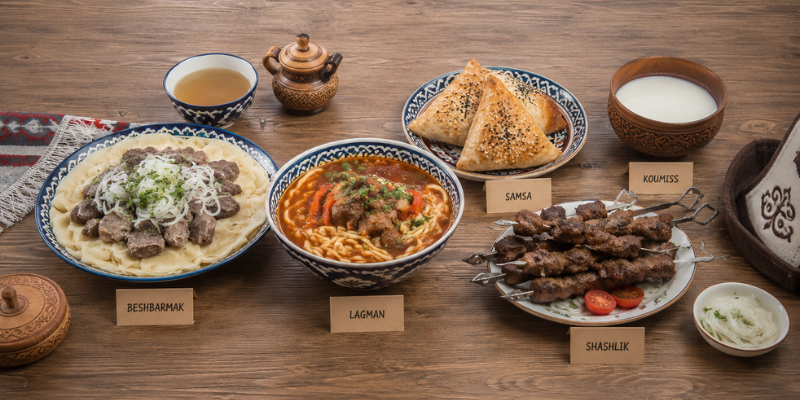
- Try local specialities such as lagman, beshbarmak and koumiss
- Leave the city behind for a day trip to Ala Archa National Park
- Stop by one of the modern coffee bars that are increasingly popping up in Bishkek
Bishkek: where city and mountains meet
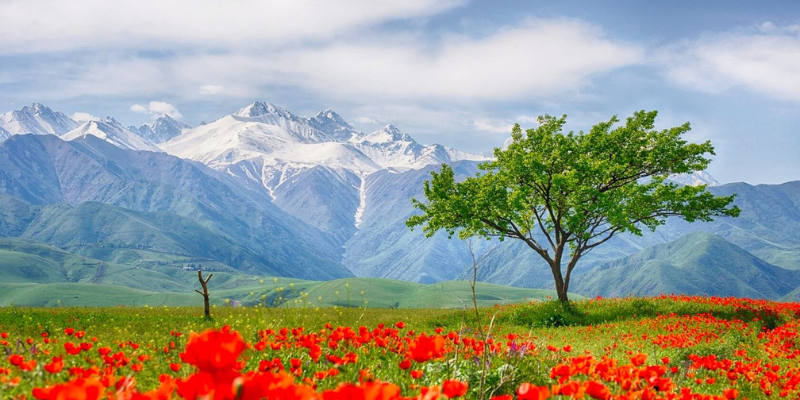
Bishkek sits at around 800 metres altitude in the Chu Valley, with the imposing Tian Shan mountains as a backdrop. On clear days you can see the snow-capped peaks right from the city centre. This gives Bishkek something you’ll find in very few other capitals: you’re in the middle of the city, yet nature always feels close by.
At the same time, Bishkek is a young and lively city. A large part of the population is relatively young, and you notice this in the growing coffee culture, modern restaurants and nightlife. Yet the Soviet past is never far away. Wide avenues, imposing government buildings and various monuments still recall the period when Bishkek was part of the Soviet Union and the city was called Frunze.
The climate also shows clear contrasts. Summers are warm and relatively dry, while winters can be cold and snowy. Spring and early autumn are therefore particularly good times to visit Bishkek. Temperatures are pleasant then, and the green parks and terraces come fully to life.
Things to see in Bishkek
Bishkek isn’t a city full of ancient temples or world-famous museums. Yet there’s plenty to discover. The charm lies precisely in the variety: imposing Soviet buildings stand next to modern coffee bars, while you can go from a bustling bazaar to a quiet, green park in no time. These places shouldn’t be missed during your visit.
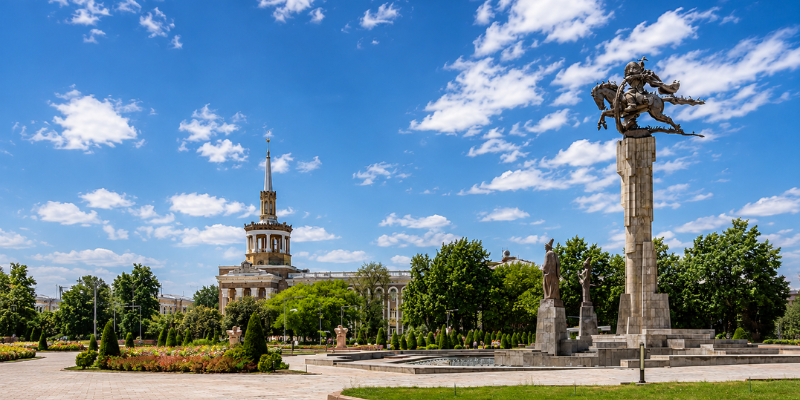
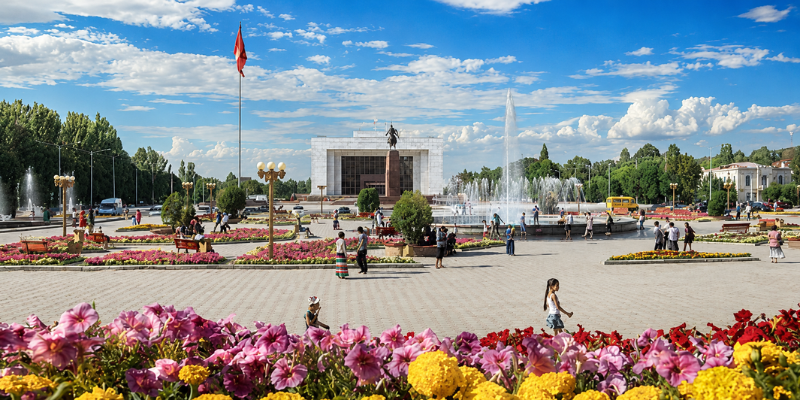
Ala-Too Square forms the heart of Bishkek. The large, open square is surrounded by stately government buildings and is an important meeting place in the city. Here you’ll also find the statue of Manas, the national hero from the famous Kyrgyz epic. Close to the square is the National Historical Museum, where you can learn more about the history and culture of Kyrgyzstan.
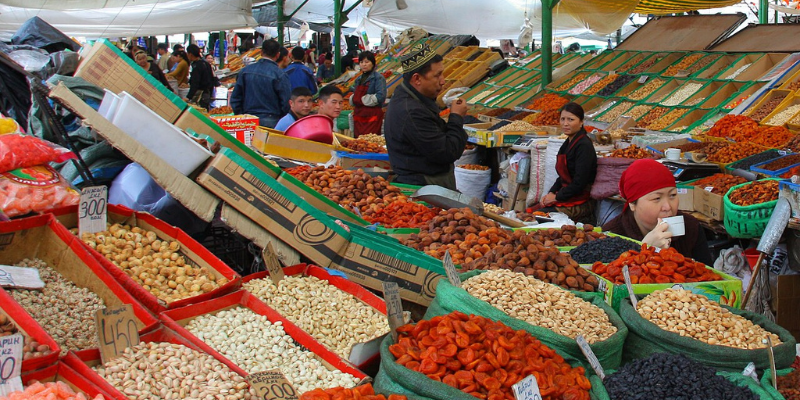
Osh Bazaar shows a completely different side of Bishkek. At this enormous market you’ll find just about everything: from spices, dried fruit and fresh bread to clothing and household goods. The smells, colours and sounds put you right in the middle of local life. Take your time to look around. If you want to avoid the biggest crowds, it’s best to go on a weekday.
Oak Park and Panfilov Park are good places to escape the bustle for a while. Especially towards the end of the day, locals come here to walk, relax and spend time together. This makes the parks not only pleasant for a short break, but also gives you a nice glimpse into daily life in Bishkek.
Cycling in Bishkek with Baja Bikes
Bishkek is a great city to explore by bike. The wide streets, green boulevards and relatively short distances mean you can see a surprising amount in just a few hours. What’s more, during the tour you don’t just cycle past well-known sights – the local guide also tells you more about the history and culture of the Kyrgyz capital.
During the Bishkek bike tour with private guide, you cycle past places including the Old Square, Ala-Too Square, the Lenin statue, the National University of Kyrgyzstan and the Kyrgyz National Philharmonic. You also pass the city hall and the railway station. One of the nicest stretches is the green Erkindik Boulevard, where on clear days you have views of the mountains around Bishkek. The tour stops regularly so the guide has time to share stories and you can take photos.
The good thing is that you do this tour with a private guide. The tour can be booked for 1 to 5 people, which gives you plenty of opportunity to ask questions and get to know the city in a personal way. The route is about 9 kilometres long and takes 1.5 to 2 hours. The bike and local guide are included in the price. Do bear in mind that e-bikes, children’s bikes and child seats are not currently available.
So if you want to not just see Bishkek but also learn the stories behind the city, cycling is a good way to discover many different sides of the capital in a short time.
Taste Bishkek: from beshbarmak to koumiss
Kyrgyz cuisine is hearty, straightforward and strongly influenced by the country’s nomadic past. Meat often takes centre stage, while bread, noodles and various dairy products are equally important. You’ll also find influences from other Central Asian cuisines in Bishkek. Here are a few dishes and drinks you should definitely try during your stay:
| Dish | What is it? |
|---|---|
| Beshbarmak | Traditional dish of boiled meat with wide noodles and onion. |
| Lagman | Hearty noodles with meat and vegetables, served as soup or with less broth. |
| Samsa | Crispy baked pastry parcels, often filled with meat and onion. |
| Koumiss | Fermented mare’s milk with a slightly sour taste. Takes some getting used to, but typical of Kyrgyzstan’s nomadic culture. |
| Shashlik | Grilled meat on a skewer that you’ll find in many places around Bishkek. |
Want to get properly acquainted with Kyrgyz cuisine? Restaurants like Navat and Supara are well-known spots for trying traditional dishes. Supara also stands out for its traditional interior featuring yurts, giving you an immediate taste of local culture.
That said, Bishkek isn’t only about traditional food. The city also has a growing coffee culture. You’ll find more and more modern coffee bars where young locals like to gather. This means you can spend one afternoon browsing local produce at a bazaar and the next moment sit on a terrace with a good coffee.
A nice tip is to head to Osh Bazaar around lunchtime. Besides fresh vegetables, herbs, bread and dried fruit, you’ll find various places where you can eat. Try a fresh samsa or a bowl of lagman, for instance, while watching daily market life unfold. This way you combine good food with one of Bishkek’s most enjoyable local experiences.
When is the best time to visit Bishkek?
Practical tips for visiting Bishkek
Visiting Bishkek is fairly straightforward to organise. Still, there are a few things worth knowing in advance:
- Bring some cash. The local currency is the Kyrgyz som, and especially at markets and smaller shops you won’t always be able to pay by card.
- Download an offline map. That way you can find your way around easily even without internet.
- Consider buying a local SIM card. They’re relatively cheap and make it easy to stay online while you’re out and about.
- Use a taxi app. Apps like Yandex Go are useful for seeing the price and destination of your ride in advance.
- Learn a few words of Russian. English isn’t spoken everywhere, so a few simple phrases can come in handy.
- Bring layers of clothing. Because of the city’s location near the mountains, the temperature difference between morning and afternoon can be quite significant.
- Drink plenty of water. Bishkek sits at around 800 metres altitude, and especially in summer it can get hot and dry.
Beyond that, Bishkek is a city where you shouldn’t over-plan. Take your time at a market, park or café and simply see what you come across along the way. That’s often how you get to know the city best.

Frequently asked questions about Bishkek
How many days do you need in Bishkek?
Two to three days is usually enough for Bishkek itself. That gives you plenty of time to explore the main sights, markets and parks without rushing. If you also want to make a day trip to somewhere like Ala Archa National Park or Lake Issyk-Kul, allow at least four to five days.
Is Bishkek safe for tourists?
Bishkek is generally a safe destination for tourists. Still, as in any large city, it’s sensible to keep an eye on your belongings. Pickpockets can be active in busy spots like Osh Bazaar. In the evening, for longer distances or unfamiliar neighbourhoods, it’s best to take a taxi.
How do you get from the airport to central Bishkek?
Manas International Airport is about 25 kilometres outside Bishkek. The easiest way to reach the centre is by taxi. There are also cheaper public transport options, but with luggage a taxi is often more comfortable. Bear in mind that journey time depends on traffic.
What language do they speak in Bishkek?
In Bishkek, Kyrgyz and Russian are mainly spoken. Russian is still widely used in daily life in the capital. At tourist spots and among younger residents you can sometimes get by with English, but that’s certainly not the case everywhere. A few simple words of Russian can therefore be useful.
Is Bishkek an expensive city?
No, by Western European standards Bishkek is a relatively affordable destination. Local food, taxis and public transport are generally cheap. On the other hand, modern restaurants, international hotels and imported products can be considerably more expensive.