


Your wallet doesn’t need to be empty to discover Rome. The Eternal City is full of squares, monuments and parks that don’t cost a cent. Between the busy tourist routes you’ll find quiet corners where Romans themselves like to go. Throwing a coin in the Trevi Fountain? That’s allowed. An espresso on Piazza Navona? That’ll cost you something. But walking through Trastevere as the sun sets? Completely free.
- The Pantheon: A 2000-year-old building with the largest unreinforced dome in the world, free to visit
- Villa Borghese: 80 hectares of greenery in the middle of the city, with viewpoints over Rome
- Trevi Fountain: Italy’s most famous fountain, accessible day and night
- Trastevere: A neighborhood with narrow streets, colorful facades and authentic trattorias
- Aventine Keyhole: A secret view of St. Peter’s through a door
The most famous sights without an entrance fee
The Trevi Fountain attracts thousands of visitors daily. Come early in the morning, around seven o’clock, and you’ll have the fountain almost to yourself. The water flows over the baroque sculptures while the city still sleeps. According to legend, you’ll return to Rome if you throw a coin over your left shoulder. Each year, workers collect about 1.5 million euros in coins from the water – that money goes to a food bank.
The Pantheon has been standing since 125 AD. Admission has admittedly not been completely free since 2023 (€5 entrance fee), but admiring the building from outside costs nothing. The square in front is a good place to rest between walking around. The round opening in the dome has a diameter of nine meters – when it rains, water simply comes inside. Under the floor are drainage holes.
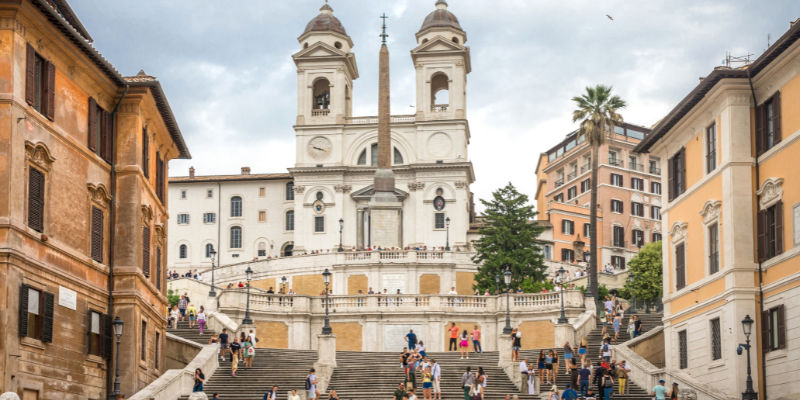
You don’t pay anything for the Spanish Steps either. The 135 steps connect Piazza di Spagna with the church of Trinità dei Monti. Sitting on the steps has been forbidden since 2019 (€250 fine), but you can walk up them. From the top you can see over the rooftops of Rome. Below flows the Barcaccia fountain, designed by Pietro Bernini in 1627.
Parks and green spaces in the city
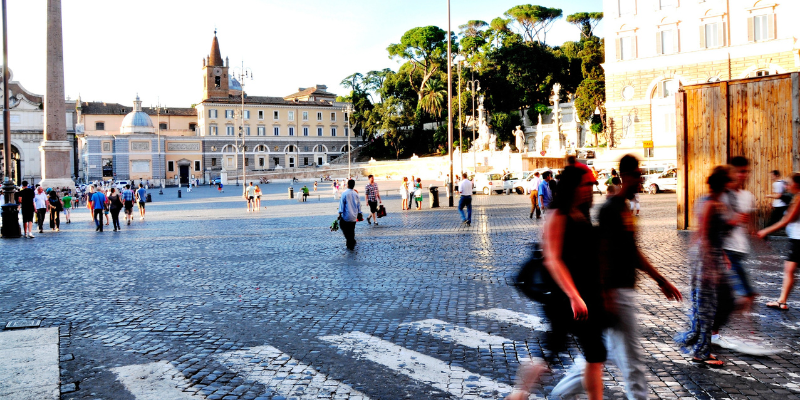
Villa Borghese is Rome’s Central Park. The park has multiple entrances, the easiest is via the Spanish Steps. You walk among pine trees and cypresses, past ponds with ducks and turtles. The Pincio terrace offers views over Piazza del Popolo. On Sunday mornings you’ll see Roman families picnicking on the grass.
Villa Doria Pamphili is three times larger than Villa Borghese, but much less touristy. Joggers, dog owners and students studying in the shade come here. The park has an aqueduct, fountains and avenues with holm oaks. On weekends there are food trucks at the main entrance on Via Aurelia Antica.
Parco degli Acquedotti is outside the center, but worth the effort. Between the grass stand remnants of Roman aqueducts – some arches are 30 meters high. You’ll feel like you’re in a movie. Take the metro to Giulio Agricola and walk ten minutes. Bring water and a sun hat, because there’s little shade.
Neighborhoods to walk through
Trastevere is beautiful during the day, but in the evening the neighborhood comes alive. The streets are cobblestoned and laundry hangs drying on washing lines between the houses. On small squares like Piazza Santa Maria, locals sit on the fountain steps. The basilica on this square has a golden mosaic on the front – you can also admire that for free.
The Jewish Ghetto lies between Teatro Marcello and the Tiber. In the 16th century, Jews were forced to live here, now it’s a lively neighborhood with bakeries and restaurants. The Portico d’Ottavia dates from 23 BC. On Saturdays it’s extra busy because many people hang around after the synagogue service.
Monti is Rome’s oldest residential area, right near the Colosseum. Via del Boschetto has small shops with vintage clothing and handmade items. On Piazza della Madonna dei Monti, students drink beer on the steps. During the week there’s a small book market on Via Leonina.
Churches with art and architecture
St. Peter’s at the Vatican is free, you only pay for the dome. The queue can be long, but usually moves along. Inside you’ll see Michelangelo’s Pietà and Bernini’s baldachin above the altar. The church is so large that you can easily walk around for an hour without having seen everything.
San Luigi dei Francesi has three paintings by Caravaggio. They hang in a chapel on the left in the church. Drop a €1 coin in the machine and the lighting goes on for ten minutes. The paintings show the life of Matthew – look at the light and shadows, that’s what Caravaggio was famous for.
Santa Maria in Trastevere is Rome’s oldest church dedicated to Mary. The ceiling has wooden beams from the 16th century. Behind the altar, golden mosaics from the 12th century shine. The church is open from early morning until late evening. Outside on the square there’s always a street musician to be found.
Viewpoints over the city
The keyhole on the Aventine Hill is one of Rome’s nicest secrets. Walk to Piazza dei Cavalieri di Malta and look for the green door at number 3. Through the keyhole you see St. Peter’s perfectly framed by trees – a photo through the hole is tricky, but you can try. The garden behind it is private and belongs to the Order of Malta.
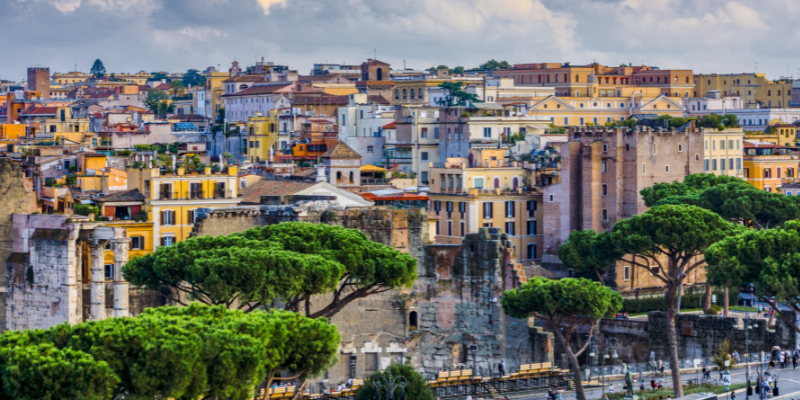
Gianicolo is a hill in Trastevere with a terrace that looks out over all of Rome. Every day at noon a cannon is fired – a tradition since 1847 to synchronize Rome’s clocks. The terrace has benches and a kiosk where you can buy ice cream. On Sundays there are puppet shows for children.
The Vittoriano, also known as the white wedding cake building, has an elevator to the roof. That costs €10, but walking around the building is free. From the steps you already have a good view of the Roman Forum and Via dei Fori Imperiali. The building is lit up until late in the evening.
Markets and squares with atmosphere
Campo de’ Fiori has a market every morning except Sunday. Vegetables, fruit, flowers and herbs are sold. Smelling is allowed, tasting sometimes too. The prices are higher than in neighborhood shops, but the atmosphere makes up for it. The statue in the middle is of Giordano Bruno, a philosopher who was burned here in 1600.
Porta Portese is Rome’s largest flea market, every Sunday morning in Trastevere. You’ll find everything: old records, vintage jackets, antique cutlery, fake watches. Bargaining is part of it. Watch your belongings, because it’s crowded. The market runs from seven o’clock until two in the afternoon.
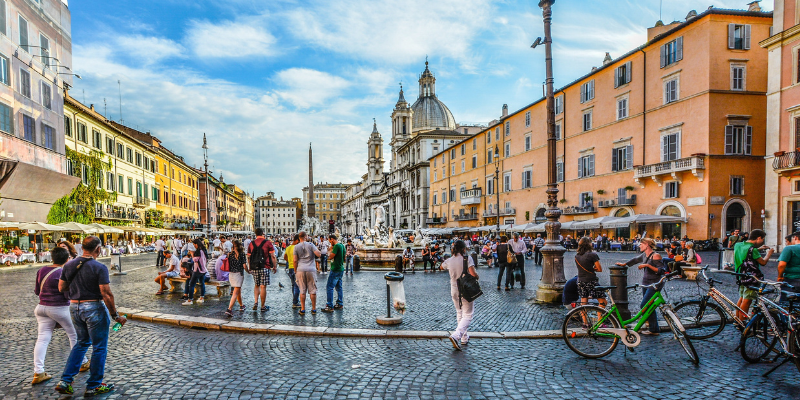
Piazza Navona used to be a stadium for chariot races. Now it’s an elongated square with three fountains. The middle one, the Fontana dei Quattro Fiumi, represents four rivers: the Nile, the Ganges, the Danube and the Río de la Plata. Come here in the evening when the terraces fill up and street artists perform their acts.
Free museum tips and when to go
On the first Sunday of every month, many museums offer free admission. This includes the Colosseum, Roman Forum, Galleria Borghese and the Vatican Museums. Expect long queues though – sometimes you’ll wait two hours. Come early or book a time slot in advance if possible.
The Centrale Montemartini combines classical sculptures with old diesel engines. The museum is housed in a former power plant. It’s free on the first Sunday, otherwise it costs €8. The Musei Capitolini on the Capitoline Hill feature Roman sculptures and Renaissance paintings – also free on the first Sunday.
Smaller museums like the Museo di Roma in Trastevere sometimes offer free admission on weekday evenings. Check the Rome municipality website for an up-to-date overview. Students under 25 from the EU often get discounts or free entry.
Practical tips for budget travelers
Rome has hundreds of drinking fountains, called nasoni (big noses). The water comes from the Apennines and is cold and clean. Refill your bottle instead of buying a new one each time. A bottle of water costs €2 to €3 at tourist spots.
Buy a day pass for public transport (€7) if you’re traveling a lot. A single bus ticket costs €1.50 and is valid for 100 minutes. Always validate your ticket when boarding. Inspectors give €50 fines if you don’t have a valid ticket. The metro has two lines (A and B) that cross at Termini.
Eat like the Romans: a cornetto and cappuccino at the bar costs €2.50 if you stand, but €5 if you sit down. A supplì (rice ball with mozzarella) or a piece of pizza bianca makes a cheap lunch. Supermarkets like Conad or Carrefour have fresh panini for €3. Restaurants often charge coperto (table service) of €2 per person.
Discovering Rome by bike
Frequently asked questions
Which museums are free on the first Sunday of the month?
The Colosseum, Roman Forum, Palatine Hill, Galleria Borghese, Musei Capitolini and the Vatican Museums are all free on the first Sunday. Booking in advance is recommended because it can get very busy. The Galleria Borghese always requires a reservation, even on free days.
How do I get from the airport to the city center without spending much money?
From Fiumicino, take the train to Termini (€14, 32 minutes) or the bus to Termini (€6, 50 minutes). From Ciampino there’s only a bus to Termini (€6, 40 minutes). Taxis cost a fixed rate of €48 from Fiumicino to the center, €30 from Ciampino. Uber isn’t much cheaper in Rome.
Are there free guided tours in Rome?
Yes, there are walking tours based on tips (free walking tours). You pay what you think it was worth at the end, usually people give €10 to €15. These tours last about two hours and depart from fixed points like the Spanish Steps. Check reviews before joining, as quality varies.
Which parks are best for relaxing outside the center?
Villa Ada in the north is quiet and has lots of shade under pine trees. Villa Torlonia has unusual buildings and underground Jewish catacombs (which do cost admission). Parco della Caffarella is part of the Via Appia Antica and feels like countryside, while you’re still in Rome. All free to access.
How much time do I need to see the main free attractions?
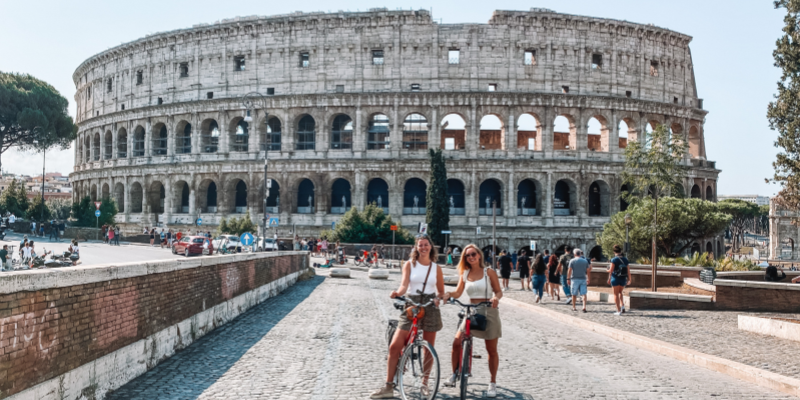
For the Pantheon, Trevi Fountain, Spanish Steps, Piazza Navona and a walk through Trastevere, you easily need a full day. Add another day for St. Peter’s, a park and some quiet neighborhoods. Three to four days gives you enough time to see Rome without rushing. With a bike tour you get a good overview of the city in just one morning.
Make it a trip without spending much
Rome is easy to discover without spending a lot of money. Walk through neighborhoods where tourists rarely come, rest in parks among the Romans, and admire art in churches that have been open for centuries. The city gives itself as a gift to those who take the time to look.
Want to see Rome with someone who knows the stories behind the buildings? Book a tour with Baja Bikes and discover places you’d otherwise miss. Our guides live in Rome and love sharing their favorite spots with you.