


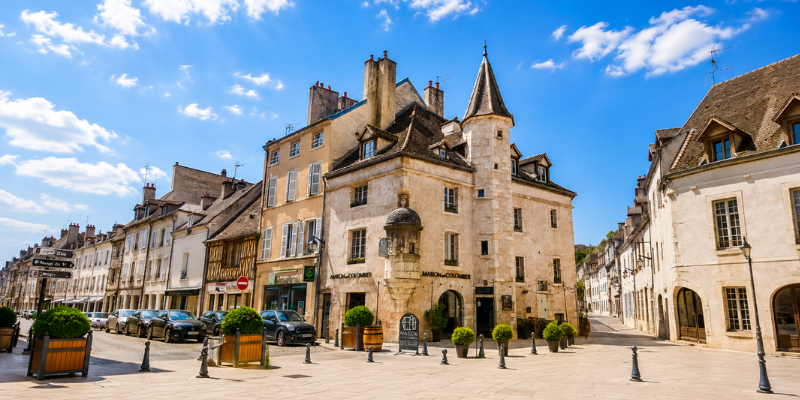
Beaune shows you straight away what Burgundy is all about. As you walk through the medieval streets, you pass historic wine houses, small cellars and facades that have shaped the streetscape for centuries. You’re never far from a good glass of Burgundy wine. Yet Beaune offers much more than tastings and wine cellars. The old ramparts, the colourful roof tiles of the Hôtel-Dieu and the lively squares give the town a character you’ll want to discover at your own pace.
Whether you’re here for the famous Burgundy wines, interested in history or simply love good food, Beaune has enough to offer for a few days. The vineyards begin almost at the edge of town, which means you can easily combine the historic centre with a bike ride through the vines and surrounding wine villages.
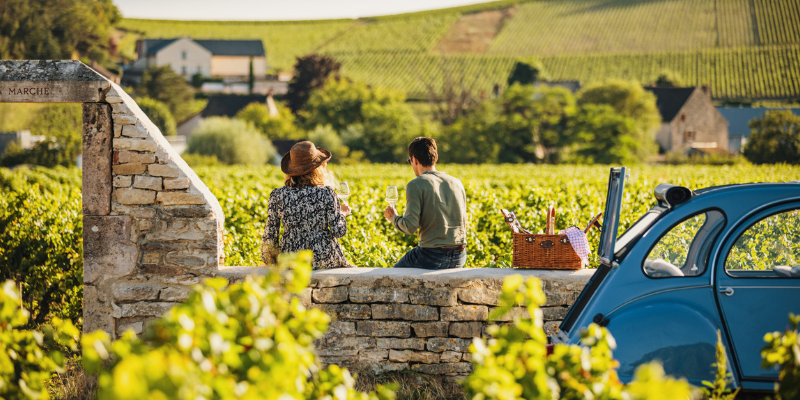
At a glance: things to do in Beaune
- Visit the Hôtel-Dieu, famous for its colourful Burgundian roof and centuries-old history
- Cycle through the Côte de Beaune and discover the vineyards and renowned wine villages around town
- Taste Burgundy wines in one of the many cellars in the historic centre
- Walk along the Remparts, the old fortifications surrounding the centre of Beaune
- Explore the history of the wine region at the Musée du Vin de Bourgogne
- Browse the Saturday morning market in Beaune and sample local produce
- Enjoy Burgundian specialities such as boeuf bourguignon, œufs en meurette and Époisses
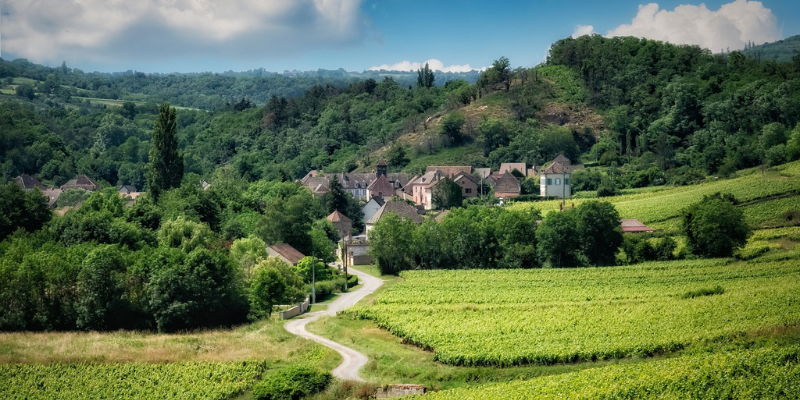
Beaune: where wine and history meet
Beaune sits in the heart of Burgundy, about 45 kilometres south of Dijon. Though the town is relatively small, it has played a central role in Burgundy’s wine world for centuries. You’ll encounter that wine tradition everywhere: from historic wine houses and atmospheric cellars to the vineyards that begin almost immediately outside the centre.
At the same time, Beaune offers much more than wine alone. The historic centre is surrounded by old fortifications and filled with monumental buildings, squares and narrow streets. The famous Hôtel-Dieu, with its colourful glazed roof tiles, catches your eye immediately. Beneath parts of the town lie extensive wine cellars where Burgundy wines are stored for years.
It’s precisely this combination that makes Beaune so special. You can wander through centuries-old streets in the morning, cycle among the vineyards afterwards and finish the day with local dishes and a glass of Pinot Noir. That’s why Beaune doesn’t feel like a destination just for wine lovers, but a place where you can truly experience the Burgundian way of life.
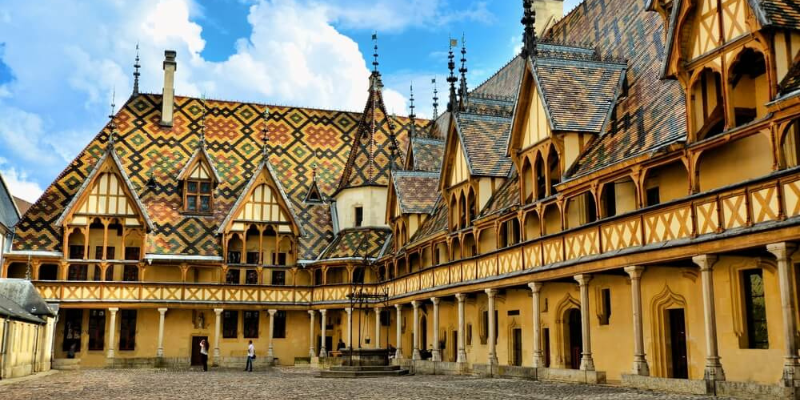
The Hôtel-Dieu: Beaune’s most colourful building
If you only visit one sight in Beaune, make it the Hôtel-Dieu. This medieval hospice was founded in 1443 by Nicolas Rolin, chancellor to the Duke of Burgundy. For centuries, the sick and poor were cared for here. Today the historic building is a museum and one of the town’s best-known attractions.
What catches your eye immediately are the famous roofs. The glazed roof tiles form geometric patterns in yellow, red, green and black and have become almost a symbol of Burgundy. Much has been preserved inside as well. You walk through the former hospital wards with wooden beds and get a clear picture of what the hospice looked like centuries ago.
Allow about an hour and a half for your visit so you can take in both the courtyard and the various rooms at a comfortable pace. There’s an admission fee for the Hôtel-Dieu; check the current price and opening times in advance.
Among the vines on two wheels with Baja Bikes
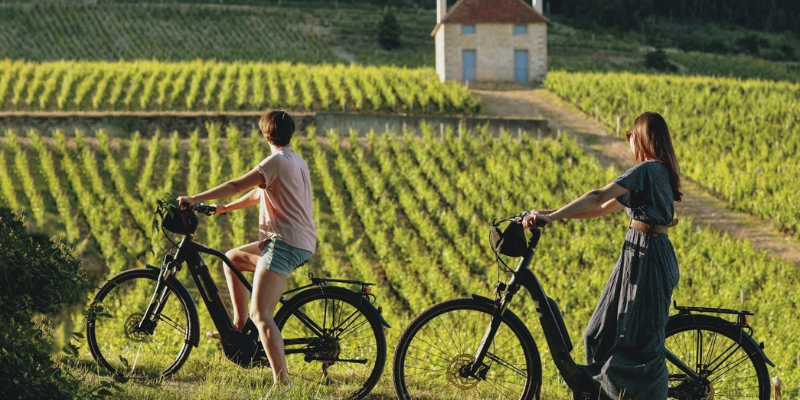
Beaune is one of those places where you naturally want to get on a bike. As soon as you leave the centre behind, you’re already cycling among the vineyards of the Côte de Beaune. You ride along quiet roads, look out over endless rows of vines and learn more about Burgundy’s wine culture along the way.
What I particularly enjoy is that here you don’t just cycle past the vineyards — you actually get to know the wine region. During this bike tour, for instance, you stop at a local wine producer and taste four different Burgundy wines. You also learn more about the famous climats along the way and discover why two vineyards that lie almost next to each other can produce completely different wines.
The route is about 15 kilometres and takes around three hours, which leaves plenty of time to stop along the way and enjoy the surroundings. For me, it’s one of the best ways to discover Beaune: first pedalling among the grapes, then tasting what those grapes become.
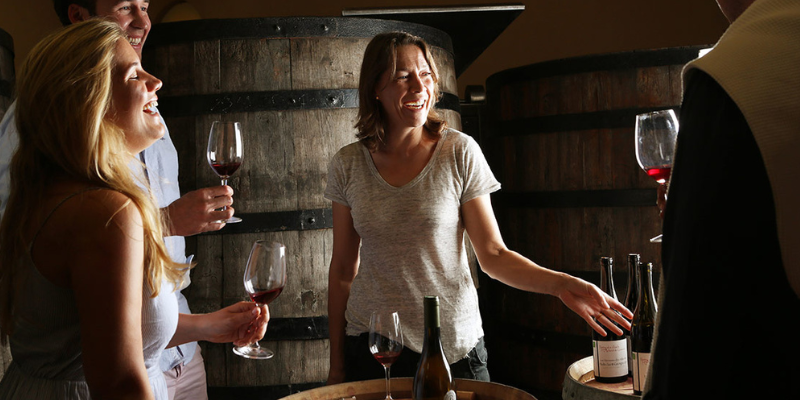
Wine tasting in Beaune: cellars and tastings
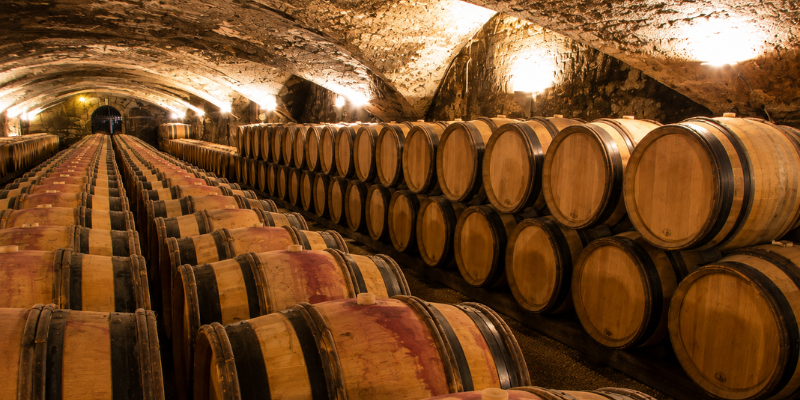
In Beaune you’re never far from a good glass of wine. Beneath the historic streets lies an entire network of old wine cellars. Some of them belong to wine houses that have been connected to Burgundy wine for centuries. Just descending into one of these cool, dark caves filled with bottles and wooden barrels is part of the experience.
A well-known name is Bouchard Père & Fils, where you can learn more about the different appellations and, of course, taste. Patriarche Père & Fils is also worth visiting for its enormous historic cellars beneath the town. Prefer to pick out a few good bottles yourself? Then Athenaeum is a nice place to drop in. You’ll find not only wine, but also books and all sorts of products related to Burgundy wine culture.
That said, I wouldn’t only go for the big names. At a smaller wine house or domaine outside the centre, tastings are often more personal. You’re closer to the vineyards and get more of the story behind the wine. Do book ahead though, as you can’t always just walk in at smaller producers.
Eating and drinking in Beaune: taste Burgundy
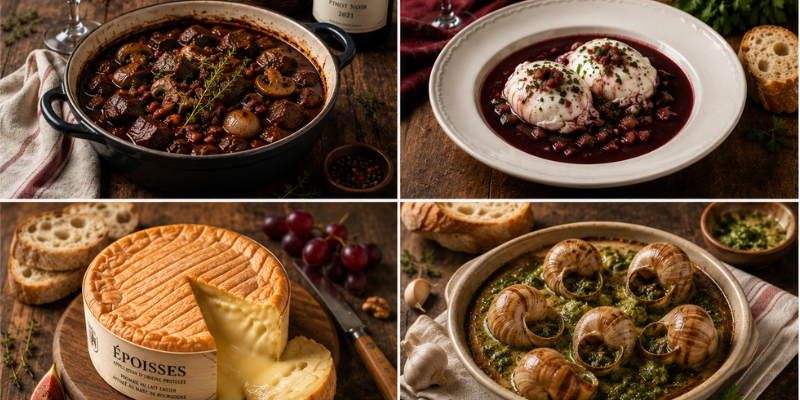
Burgundy cuisine is hearty, flavourful and above all meant to be savoured. What’s more, almost every local speciality pairs perfectly with a Burgundy wine. These are the dishes I’d definitely try in Beaune:
| Dish | What to expect |
|---|---|
| Boeuf bourguignon | Beef slowly braised in red wine, often with mushrooms and bacon. A true Burgundy classic. |
| Œufs en meurette | Poached eggs in a rich red wine sauce. Simple on paper, surprisingly delicious on your plate. |
| Époisses | Creamy Burgundy cheese with a fairly pronounced smell and flavour. For the true cheese lover. |
| Escargots de Bourgogne | Snails with butter, garlic and parsley, hot from the oven. Leave your doubts at home. |
Where to eat in Beaune
In the historic centre you’ll find plenty of bistros and restaurants serving these Burgundy classics. Le Bistrot Bourguignon, for example, is a nice spot for a casual meal. If you want something more elaborate, L’Écusson is an option for a special evening.
In Beaune on a Saturday morning? Stop by the Marché de Beaune. You’ll find local cheeses, charcuterie, bread and all sorts of other regional products. Perfect for picking up something tasty for a picnic among the vineyards.
Best time to visit Beaune
You can visit Beaune year-round, but each season has its own character. Whether you want to cycle through the vineyards, experience the grape harvest or explore the wine cellars in peace and quiet makes quite a difference to when you go.
| Period | Weather | Crowds | Tip |
|---|---|---|---|
| March – April | Cool, 10–15°C | Quiet | Good for a peaceful visit outside high season |
| May – June | Pleasant, 18–24°C | Moderate | A lovely time for cycling and walking |
| July – August | Warm, 25–30°C | Busy | Start early if you want to avoid the biggest crowds |
| September – October | Pleasant, 15–22°C | Busier | Harvest time and beautiful colours in the vineyards |
| November | Cool, 8–12°C | Extra busy around wine auction | Special period due to the Hospices de Beaune wine auction |
| December – February | Cold, 2–8°C | Quiet | Atmospheric and far fewer tourists |
September and October are my personal favourite months. The vineyards slowly change colour and at the same time the whole region is focused on the grape harvest. What’s more, temperatures are usually pleasant enough to spend plenty of time outdoors.
Practical tips for visiting Beaune
Beaune is compact, so you can see a surprising amount in a single day. That said, I’d recommend staying at least two nights. With two or three days, you’ll have enough time for the historic centre, the Hôtel-Dieu and a few wine tastings. You’ll also be able to explore the vineyards and surrounding wine villages without rushing.
Beaune is easily reached by train from Dijon and Paris, among other cities. If you’re driving, it’s usually more practical to park outside the historic centre and walk the final stretch. Once you’re in Beaune, you’ll barely need the car.
Planning to visit wine estates? Book tastings in advance, especially during high season and harvest time. Smaller domaines often work by appointment only. Bring comfortable shoes if you’re heading into the vineyards, and pack a light rain jacket just in case.
Frequently asked questions about Beaune
How long do you need to visit Beaune?
Two to three days gives you enough time to explore Beaune at a comfortable pace. Spend the first day in the historic centre and at the Hôtel-Dieu, then head out into the vineyards. With a third day, you’ll have time for an extended wine tasting, a visit to nearby wine villages or, on Saturdays, the Beaune market.
How much does a wine tasting cost in Beaune?
The price of a wine tasting varies by estate and depends on factors such as the number of wines you sample. Well-known wine houses typically charge for organised tastings. Smaller domaines often work by appointment and offer a more personal experience. Book ahead during high season.
Is Beaune suitable for cycling?
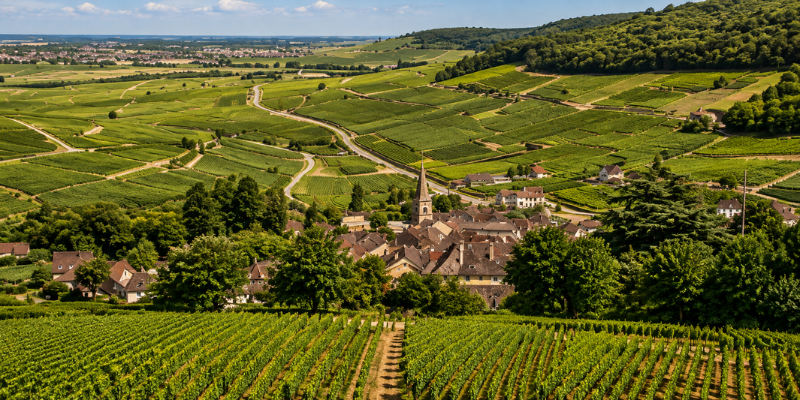
Absolutely. The combination of a compact centre, quiet country lanes and vineyards makes Beaune an excellent destination to explore by bike. The routes around the town are mostly gently rolling and pass through well-known wine villages such as Pommard, Volnay and Meursault. The vineyards begin just outside the town.
When is the best time to visit Beaune?
For pleasant weather, May, June, September and October are good months. September and October are particularly special, as the grape harvest takes place and there’s plenty of activity in the vineyards. If you’d prefer to explore Beaune in peace and quiet, spring and winter are solid alternatives.
Which wine should you try in Beaune?
Beaune sits in the heart of a region known above all for Pinot Noir and Chardonnay. During a tasting, try different appellations side by side. You’ll notice how much the flavour can vary between wines from vineyards that are sometimes only a few kilometres apart.