


Yogyakarta attracts travelers looking to explore beyond Bali. Here, Javanese culture, ancient temples, and daily life uniquely converge. As you enter the city, you can smell the incense at the kraton gate, hear the sounds of gamelan music in a courtyard, and watch a vendor frying fresh pisang goreng. This makes Yogyakarta feel not just like a city to visit, but a destination to truly experience.
Whether you want to explore the impressive temple complexes of Borobudur and Prambanan, wander through the atmospheric kampongs, or simply enjoy a cup of kopi joss on Jalan Malioboro, Yogyakarta has more than enough to offer for a stay of at least three days. Moreover, the city is an excellent base for day trips to the most famous attractions of Central Java. Want to arrange everything easily? You can book various excursions to Borobudur and Prambanan through platforms like GetYourGuide.
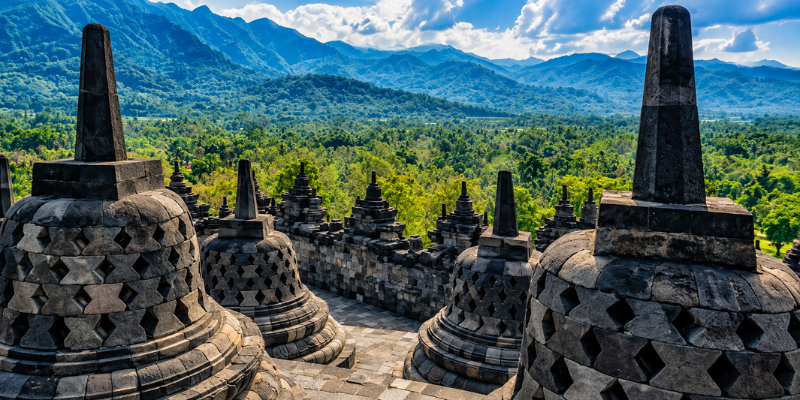
At a glance: what to do in Yogyakarta?
- 🌅 Visit Borobudur at sunrise
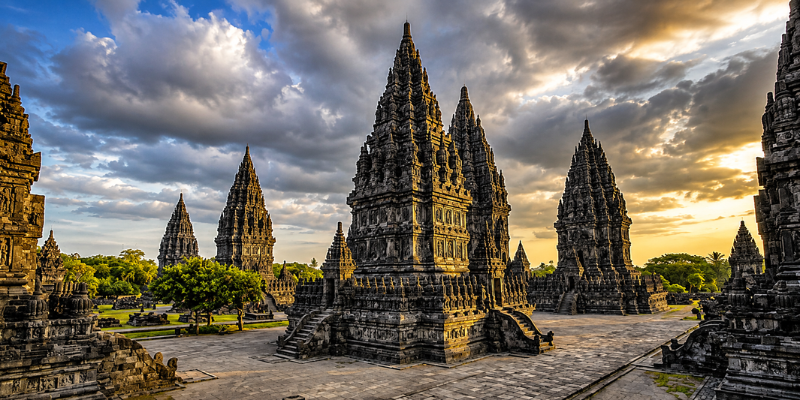
- 🛕 Discover Prambanan, the largest Hindu temple complex in Indonesia
- 👑 Walk through the kraton district and visit the sultan’s palace
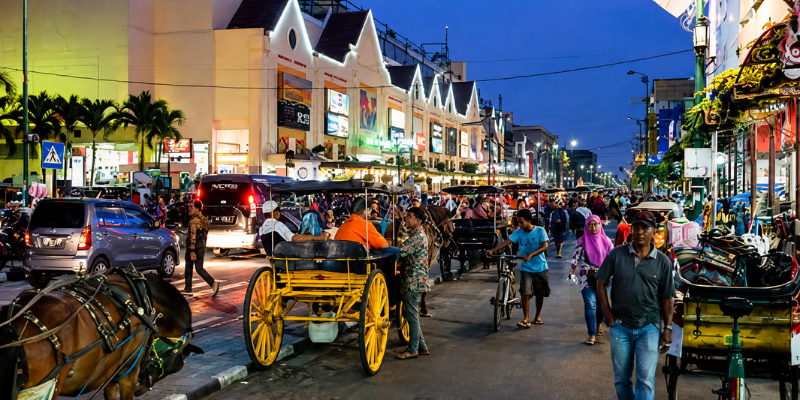
- 🎭 Shop for batik, wayang puppets, and local souvenirs on Jalan Malioboro
- 🍜 Taste Javanese cuisine at Pasar Beringharjo and in the cozy warungs
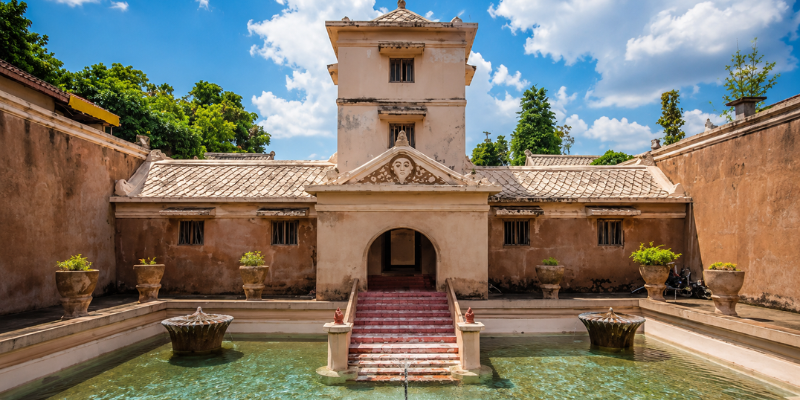
- 🌿 Explore the atmospheric Taman Sari, the former water palace of the sultan
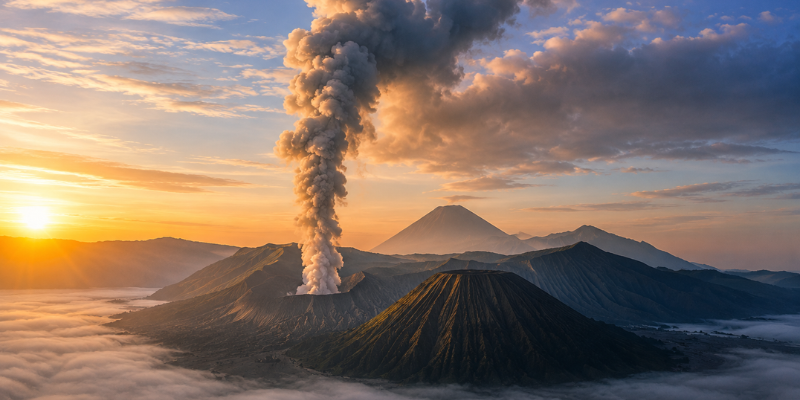
- 🌋 Admire the imposing Merapi volcano up close
Why Yogyakarta is different from the rest of Java
Yogyakarta, known locally as Jogja, is located in the heart of Java. Additionally, the active Merapi volcano, just 28 kilometers from the city, towers over the landscape, providing an impressive backdrop that you’ll frequently see during your stay.
The city has been the cultural heart of Java for centuries. The Sultanate of Yogyakarta still exists, and the current sultan is also the governor of the province. This gives the city a unique position within Indonesia. The kraton, the sultan’s palace, is not a museum recreating the past. On the contrary, it remains a vibrant center where the court, ceremonies, and ancient traditions continue daily.
The climate also makes Yogyakarta an attractive destination. The city has a tropical climate with a dry season from April to October and a rainy season from November to March. Generally, the best time to visit is between May and September. During these months, the skies are often clearer, offering a beautiful view of Merapi. Moreover, the temple complexes of Borobudur and Prambanan are pleasant to visit then.
The major attractions of Yogyakarta
Yogyakarta has several places that you really shouldn’t miss. These attractions showcase how religion, history, and culture are intertwined here.
| Attraction | Why visit? | Handy tip |
|---|---|---|
| Borobudur | This impressive Buddhist monument is about 40 kilometers northwest of Yogyakarta and is known for its stupas, reliefs, and views over the lush landscape. | Head out early. It’s quieter, and you can enjoy the beautiful morning light. |
| Prambanan | This ninth-century Hindu temple complex is closer to the city and consists of over 200 temples. The towering Shiva temple is particularly impressive. | Don’t rush Prambanan together with Borobudur. Allow enough time for both complexes. |
| Kraton Yogyakarta | The sultan’s palace remains an important cultural center. You can also regularly see traditional music, dance, and wayang performances there. | Allocate about one to two hours for your visit, so you can leisurely stroll through the various courtyards. |
| Taman Sari | This former water palace is within walking distance of the kraton and consists of baths, corridors, towers, and partially restored buildings. This combination gives the place a lot of charm. | Combine Taman Sari with the kraton. This way, you can easily visit both attractions on the same morning or afternoon. |
Cycling in Yogyakarta with Baja Bikes
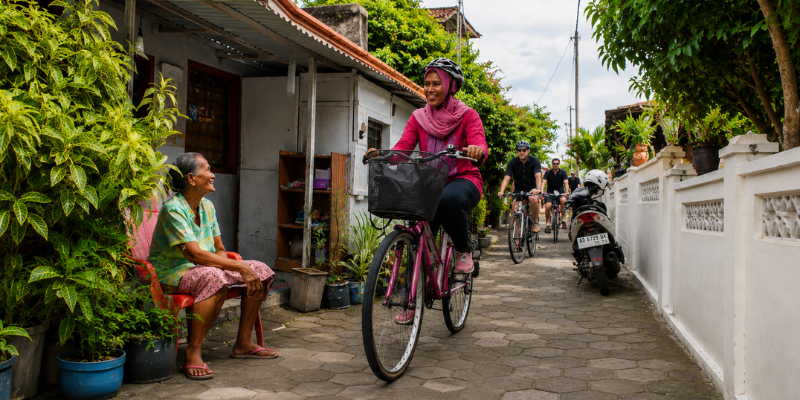
If there’s one activity I would recommend to everyone in Yogyakarta, it’s a bike tour. On a bike, you discover a side of the city that you can easily miss on foot or from a taxi. You ride through narrow kampongs where children play in the streets, past small workshops where craftsmen still make batik by hand, and through quiet streets where daily life unfolds before your eyes. This way, you experience Yogyakarta in a completely different way.
During the Yogyakarta Highlights Bike Tour, a local guide takes you to Keraton Ngayogyakarta Hadiningrat, the Sultan’s palace, and the beautiful Taman Sari Water Castle. You also visit a traditional market, where you get acquainted with local products and the vibrant atmosphere of the city. Along the way, the guide shares insights about the history, culture, and traditions of Yogyakarta, while also introducing you to the less touristy neighborhoods.
Halfway through the tour, you enjoy a delicious local lunch, allowing you to not only discover the city but also taste the Javanese cuisine. Moreover, you cycle in a small group, giving you plenty of time to ask questions and stop for a photo or an interesting story along the way.
Only have a few days in Yogyakarta? Then this bike tour is, in my opinion, the ideal way to truly get to know the city in a short time. Check out the Yogyakarta Highlights Bike Tour on Baja Bikes and easily book online.
Food, drinks, and the local cuisine
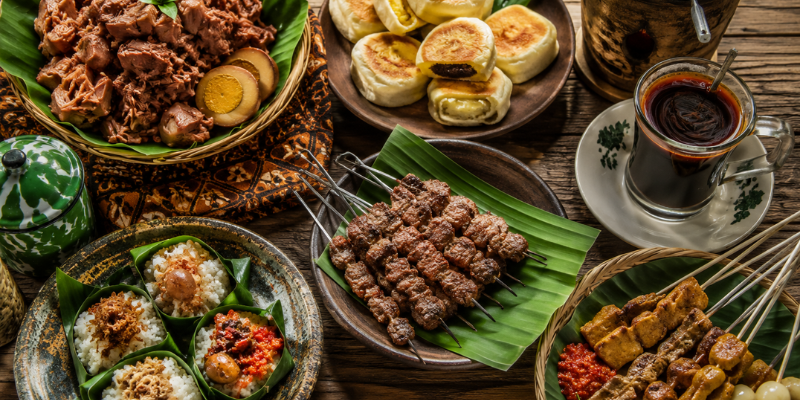
Yogyakarta is known as the culinary capital of Java. This makes the city the perfect place to discover traditional Javanese cuisine. From simple food stalls to cozy warungs, you can taste authentic dishes that have been prepared for generations almost everywhere. So, take the time to explore the local cuisine alongside the attractions.
| Dish | What is it? | Where to try? |
|---|---|---|
| Gudeg | The most famous dish of Yogyakarta. Unripe jackfruit is stewed for hours in coconut milk and palm sugar, resulting in a surprisingly sweet taste. | Around Pasar Beringharjo or in the Wijilan district, the gudeg street of the city. |
| Bakpia | Small filled pastries traditionally with mung beans, but now also available with chocolate, cheese, or durian. | At Bakpia Pathok, a well-known specialty from Yogyakarta. |
| Sate Klathak | Tender goat satay grilled on iron skewers over charcoal. This gives the meat a distinctive flavor. | In the Bantul district, just south of the city. |
| Kopi Joss | Traditional Javanese coffee with a glowing piece of charcoal dipped in. Locals also claim it’s good for the stomach. | At the angkringans along Jalan Malioboro. |
| Nasi Kucing | Small portions of rice with various side dishes. Ideal if you want to try multiple local flavors. | At almost any angkringan in the city. |
Best time to visit Yogyakarta
Yogyakarta is an interesting destination all year round. However, the weather can greatly affect your visit, especially if you plan to visit Borobudur, Prambanan, or Mount Merapi. Therefore, the table below will help you choose the best travel period.
| Period | Season | Average temperature | Ideal for |
|---|---|---|---|
| January – March | Rainy season | 27–30 °C | Fewer tourists, lower prices, and a lush environment |
| April – May | Transition period | 27–31 °C | Pleasant weather and relatively quiet |
| June – August | Dry season | 25–29 °C | Bike tours, temple visits, and a clear view of Mount Merapi |
| September – October | Dry season | 26–31 °C | Pleasant weather, less crowded than summer, and ideal conditions for sightseeing |
| November – December | Start of rainy season | 27–30 °C | Lush landscapes and occasional tropical showers |
Generally, May through September is the best period to visit Yogyakarta. During these months, it is usually dry, and the conditions are ideal for exploring the temple complexes and the city. However, keep in mind that June, July, and August are the busiest months. If you’d prefer to experience Borobudur or Prambanan without the largest crowds, opt for September or early October. The weather is often still excellent, while it’s much quieter.
Plan your visit to Yogyakarta
Yogyakarta is a destination that cannot be fully explored in just one day. The combination of impressive temples, vibrant markets, ancient traditions, and the hospitality of the local people makes the city truly special. Each visit feels a little different because of this unique blend.
Ideally, set aside three to five days for Yogyakarta. This allows you enough time to not only explore the city itself but also visit Borobudur, Prambanan, and the awe-inspiring Merapi at your leisure. Additionally, you’ll have plenty of time to enjoy the local cuisine or simply wander through the charming streets of the city.
Whether you’re drawn by the culture, history, food, or stunning temple complexes, Yogyakarta ensures that nearly every traveler leaves with a smile. That’s why this remarkable city should not be missed on a tour through Indonesia.
Frequently asked questions about Yogyakarta
How many days do I need for Yogyakarta?
Generally, three to five days is ideal. In three days, you can visit the kraton, Taman Sari, Prambanan, and Jalan Malioboro. If you also want to explore Borobudur or take a bike tour, plan for at least one extra day.
What does a visit to Borobudur cost?
An entrance ticket for foreign visitors costs about 25 dollars (approximately €23). It’s wise to reserve your ticket in advance through the official website to avoid long wait times. Also, consider the transportation costs from Yogyakarta. A taxi or private driver typically costs between €10 and €20 for a round trip.
Is Yogyakarta safe for tourists?
Yes, Yogyakarta is generally a safe destination. However, it’s wise to stay alert for pickpockets in busy areas like Jalan Malioboro. Keep your bag securely closed and store valuables safely. Traffic can also be quite busy. If you wish to explore the city by bike, a bike tour with a local guide is a safe and relaxed option.
How do I get from the airport to the center of Yogyakarta?
The Yogyakarta International Airport (YIA) is located about 45 kilometers west of the city center. You can easily take a taxi or private driver, which costs around €15 to €25. Additionally, there is a direct train to Yogyakarta Tugu Station, which is a cheaper option and takes about an hour to reach the center.
What attracts the most visitors to Yogyakarta?
Most travelers come for the impressive temple complexes of Borobudur and Prambanan. Additionally, the kraton, the lively batik market, the vibrant atmosphere on Jalan Malioboro, and the nearby Merapi volcano are significant reasons to visit Yogyakarta. This combination of culture, history, and nature makes the city so popular.