


You step off the train, turn a corner and notice it immediately: Udaipur is different. White palaces reflect in the waters of Lake Pichola, whilst rickshaws zip through the streets and music drifts from the temples. Meanwhile, market vendors sell spices, colourful fabrics and fresh flowers. Udaipur doesn’t reveal itself slowly — it grabs your attention straight away.
The city is known as the City of Lakes for good reason. Water and palaces shape much of the view, but Udaipur has far more to offer. Wander through narrow lanes full of colour, visit lively markets and look out over the city from one of the many rooftop terraces. Despite all the activity, there’s a relaxed atmosphere that makes you naturally slow down.
Whether you come for the impressive palaces, the temples, the local food or simply the atmosphere: there are surprisingly many things to see in Udaipur. It’s a city where you can easily spend a few days and discover something new each time.
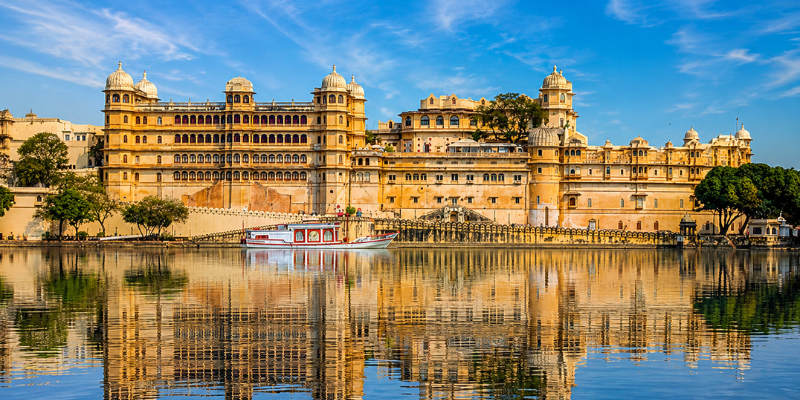
Udaipur in brief: 7 things you don’t want to miss
- Visit the impressive City Palace, Rajasthan’s largest palace complex
- Take a boat trip on Lake Pichola and see Jag Mandir along the way
- Visit the richly decorated Jagdish Temple in the heart of the old city
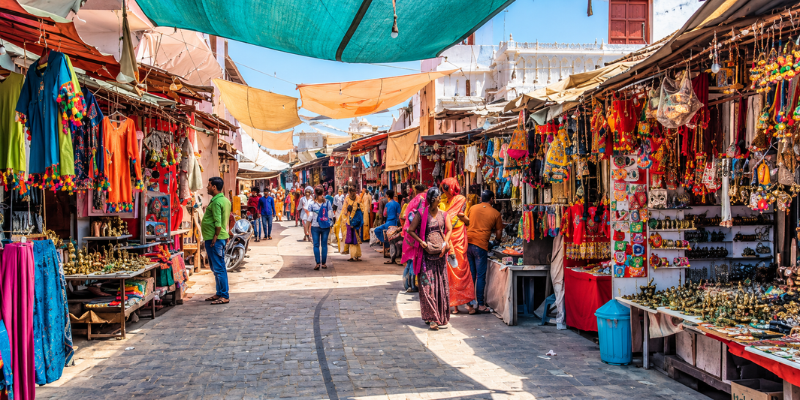
- Browse Hathi Pol Bazaar amongst textiles, jewellery, art and local produce
- Escape the crowds for a moment in Saheliyon Ki Bari, the historic garden of the court ladies
- Discover the different neighbourhoods and local life of Udaipur
- End the day with sunset from Monsoon Palace or Karni Mata Temple
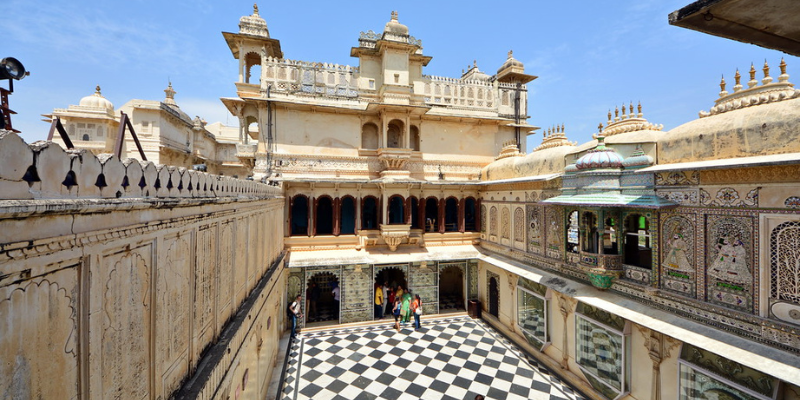
Udaipur between lakes and the Aravalli hills
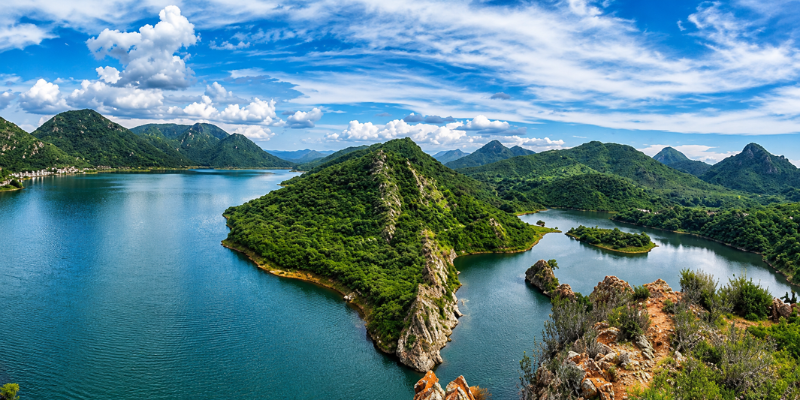
Rajasthan has plenty of cities that make an immediate impression. Think of Jaipur with its pink façades or Jodhpur with its distinctive blue houses. Yet Udaipur feels different. The city lies in southern Rajasthan, amongst the Aravalli hills, at around 600 metres elevation. This makes the landscape greener than you might expect from Rajasthan, and lakes and hills shape much of the view.
Udaipur was founded in 1559 by Maharana Udai Singh II, who was looking for a new capital for the kingdom of Mewar. The location wasn’t chosen by chance. The surrounding hills offered natural protection, whilst the lakes provided water. A city full of palaces, temples and havelis grew here, still reminding visitors of the royal past.
At the same time, Udaipur feels surprisingly relaxed. Especially in the old city, you walk through narrow lanes past colourful shops, small temples and traditional havelis. Turn down a side street and you’ll soon come across a local tea stall or quiet courtyard. It’s precisely this combination of impressive architecture, water, mountains and everyday street life that gives Udaipur its own character.
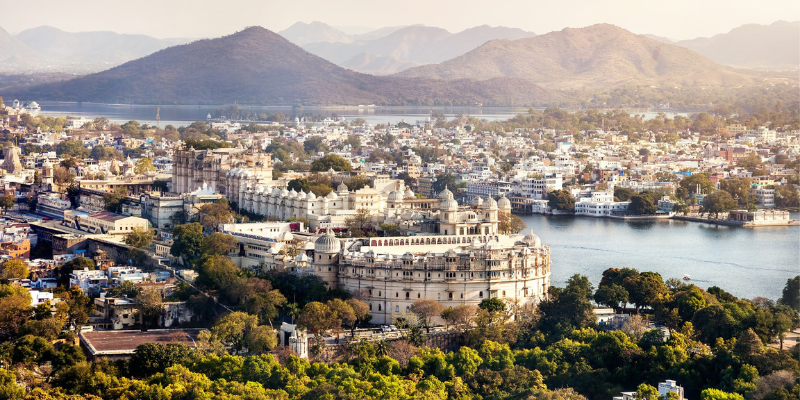
Palaces, temples and lakes: what to see in Udaipur
Udaipur has enough attractions to easily keep you busy for a few days. Many of the well-known spots are close to each other, which means you can combine several highlights without difficulty.
| Attraction | Why visit? | Useful tip |
|---|---|---|
| City Palace | Impressive palace complex with courtyards, balconies, royal chambers and views over Lake Pichola. | Go early, as it can get quite busy later in the day. |
| Lake Pichola | The famous lake that gives Udaipur its romantic character. On a boat trip you’ll see Lake Palace and Jag Mandir, amongst others. | Go late afternoon for good light and views of the palaces. |
| Jagdish Temple | A 17th-century Hindu temple with detailed carvings and a lively religious atmosphere. | Take your time to watch the daily temple life as well. |
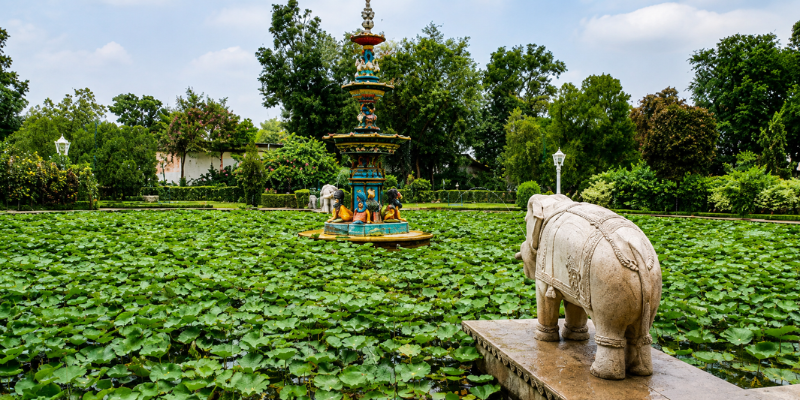
| Saheliyon Ki Bari | Historic garden with fountains, marble pavilions and plenty of greenery. | Ideal when you want to escape the crowds of the old city for a while. |
Cycling in Udaipur with Baja Bikes
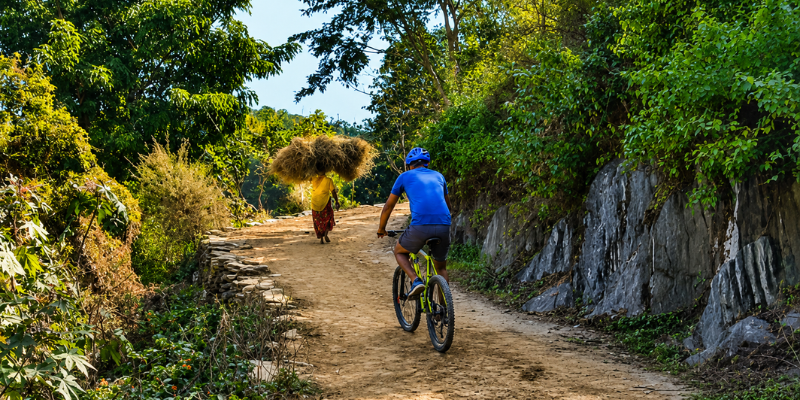
Want to see a different side of Udaipur beyond the palaces and busy streets of the old city? A bike is a great way to explore the surrounding area. During the Udaipur bike tour, you leave the city gradually behind and cycle past lakes, green hills and small villages. Along the way, you get a glimpse of daily life outside the tourist centre.
The tour starts early in the morning at Fateh Sagar Lake, where you watch the sunrise. You then cycle via Queen’s Road towards the surrounding countryside. Along the way, you pass several villages and the local guide tells you more about life in this area. The route continues through the Aravalli landscape to Badi Lake, where there’s time for a relaxed break. The return journey takes a different route, so you see new villages and wooded paths along the way.
The bike tour lasts about 3 hours and the route is approximately 16 to 18 kilometres long. The bike, helmet and local guide are included. You can also choose an e-bike at no extra cost at the moment. Children’s bikes of 24 inches are available and children can join from a height of about 120 cm.
The early start might take some getting used to, but it has a real advantage in Udaipur. It’s still relatively cool and quiet, and you see the landscape slowly waking up. Bring your camera, as there’s plenty of time to stop for photos along the way.
Taste Udaipur: from Rajasthani thali to masala chai
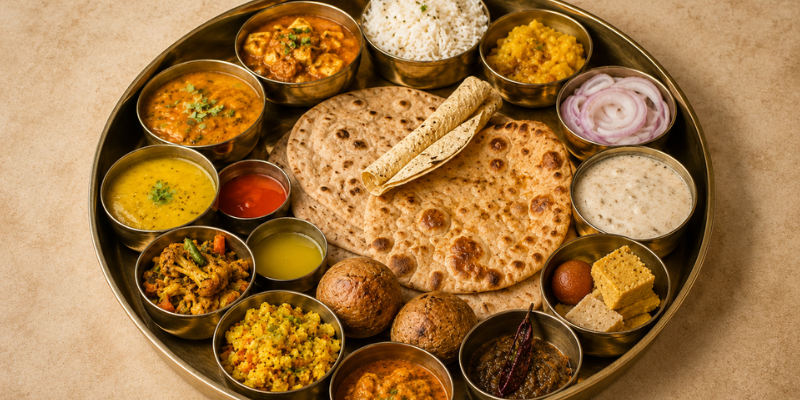
Udaipur has a surprisingly good food scene. You’ll find simple food stalls and local restaurants, but also atmospheric rooftop terraces with views over Lake Pichola. The cuisine of Rajasthan is quite different from what you might know from other parts of India.
A dish you should definitely try is dal baati churma. It consists of firm, baked wheat balls eaten with dal and a sweet churma. You’ll also come across many elaborate Rajasthani thalis in Udaipur, where several small dishes are served together on one large platter. Ideal if you want to try multiple local flavours at once.
For a traditional thali, Natraj Dining Hall is a well-known name in Udaipur. Don’t expect a fancy restaurant, but rather a simple place where the food takes centre stage. That makes it a good choice if you want to get to know the local cuisine.
After all that Indian food, fancy coffee and breakfast? Then you can settle in at Café Edelweiss in the old city. For a more local experience, grab a masala chai from a small tea stall around Ghanta Ghar. It’s particularly lively in the morning, as the market vendors slowly start their day.
Finally, a fresh mango lassi and nimbu pani – a refreshing Indian lemonade with lemon or lime – are wonderful on a warm day. Especially from a rooftop terrace with views over the lake, such a cooling drink tastes just that bit better.
Best time to visit Udaipur
The climate in Udaipur varies greatly by season. Although the altitude makes it slightly more pleasant than elsewhere in Rajasthan, the summer months are still hot and humid. It’s worth checking which period suits your trip best. The table below helps you decide.
| Period | Temperature (avg.) | Rainfall | Notes |
|---|---|---|---|
| October – November | 25–32°C | Low | Dry and warm, busy but manageable |
| December – February | 15–25°C | Very low | Coolest and quietest; good conditions for cycling |
| March – April | 28–38°C | Low | Good for early risers; afternoons get warm |
| May – June | 35–42°C | Low to medium | Very hot; less pleasant for active outings |
| July – September | 28–35°C | High (monsoon) | Lakes fill up, green landscape, fewer tourists |
During the monsoon, Udaipur takes on a completely different character. The hills turn green, the lakes fill to the brim and the city smells of wet earth. Although it’s not the most comfortable season, it’s one of the most distinctive times to see the city. It’s also much quieter than during high season. If rain doesn’t put you off, August can be an interesting time to visit Udaipur, with fewer crowds and often lower prices.
How many days do you need for Udaipur?
I’d recommend spending at least two to three days in Udaipur. Although many attractions are fairly close together, it’s worth not ticking everything off in a single day. The atmosphere around the lakes, narrow lanes and old havelis is just as important as the well-known highlights.
With two days you can visit the City Palace, Lake Pichola, Jagdish Temple and a few viewpoints. If you have three days, you’ll also have time for places outside the busy centre, such as the gardens of Saheliyon Ki Bari or a trip to the hills surrounding the city.
Try not to fill your days completely. Walk along the ghats early in the morning, find a rooftop terrace late in the afternoon, and take a boat ride on Lake Pichola around sunset. It’s during these quieter moments that Udaipur shows its best side.
Frequently asked questions about things to see in Udaipur
How many days do you need in Udaipur?
Two to three days gives you enough time to discover the main attractions in Udaipur. If you have three days or longer, you can also make a day trip to places such as Chittorgarh or the Jain temples of Ranakpur.
What does entry to City Palace Udaipur cost?
There’s an admission fee for the City Palace Museum. Prices can change and different rates apply, for example for adults, children and cameras. Check the current admission prices and opening hours before your visit. Allow at least two hours to explore the enormous palace complex properly.
Is Udaipur easy to explore on foot?
Many attractions in the old centre are relatively close together. This means you can easily combine Jagdish Temple, the City Palace and the ghats along Lake Pichola on foot. Bear in mind, though, that some lanes are steep and traffic can be quite chaotic. For places further outside the centre, a rickshaw or taxi is useful.
What’s the best way to see Pichola Lake?
A boat ride on Lake Pichola is one of the best ways to see Udaipur from the water. Along the way you’ll get views of the City Palace, Jag Mandir and the historic buildings along the shore. Late afternoon is particularly beautiful, when the palaces are bathed in warm evening light.
Which local dish should you try in Udaipur?
Dal baati churma is one of the best-known dishes from Rajasthan and definitely worth trying. Laal maas, a spicy meat curry, is another local classic. If you’d prefer something smaller, go for kachori, a crispy fried pastry with a savoury filling.